Costa Rica's first protected area, trail details, what to bring, wildlife to expect, and the beach at the end.
Cabo Blanco is the oldest protected area in Costa Rica, and after one visit you understand why the people who fought to create it were so fierce about it. The reserve sits at the southern tip of the Nicoya Peninsula near the village of Cabuya, roughly 30-40 minutes from Santa Teresa depending on road conditions, and it rewards the effort with primary forest, serious wildlife, and a beach that almost nobody reaches without earning it.
The Basics You Need Before You Go
Get these details locked before you drive down, because more than a few visitors arrive on the wrong day.
- Hours: Wednesday through Sunday, 8am to 4pm. Closed Monday and Tuesday, no exceptions.
- Entry fee: $12 per person (as of mid-2026, confirm locally as fees occasionally adjust).
- No food or water is sold inside. This is not a resort park. Bring everything you need.
- Getting there: From Santa Teresa, head south through Mal Pais and Cabuya. The road is mostly paved but has rough patches, especially after wet-season rains. A 4x4 is not strictly required in dry season but is strongly recommended June through November. See the getting-around-santa-teresa-without-car guide if you are relying on shared transport or a taxi.
If you are visiting during the rainy season, the river crossing on the Sueco Trail can go from knee-deep to waist-deep. Factor that in.
The Trails
There are three options inside the reserve, and they connect, so you can mix and match based on your time and fitness level.
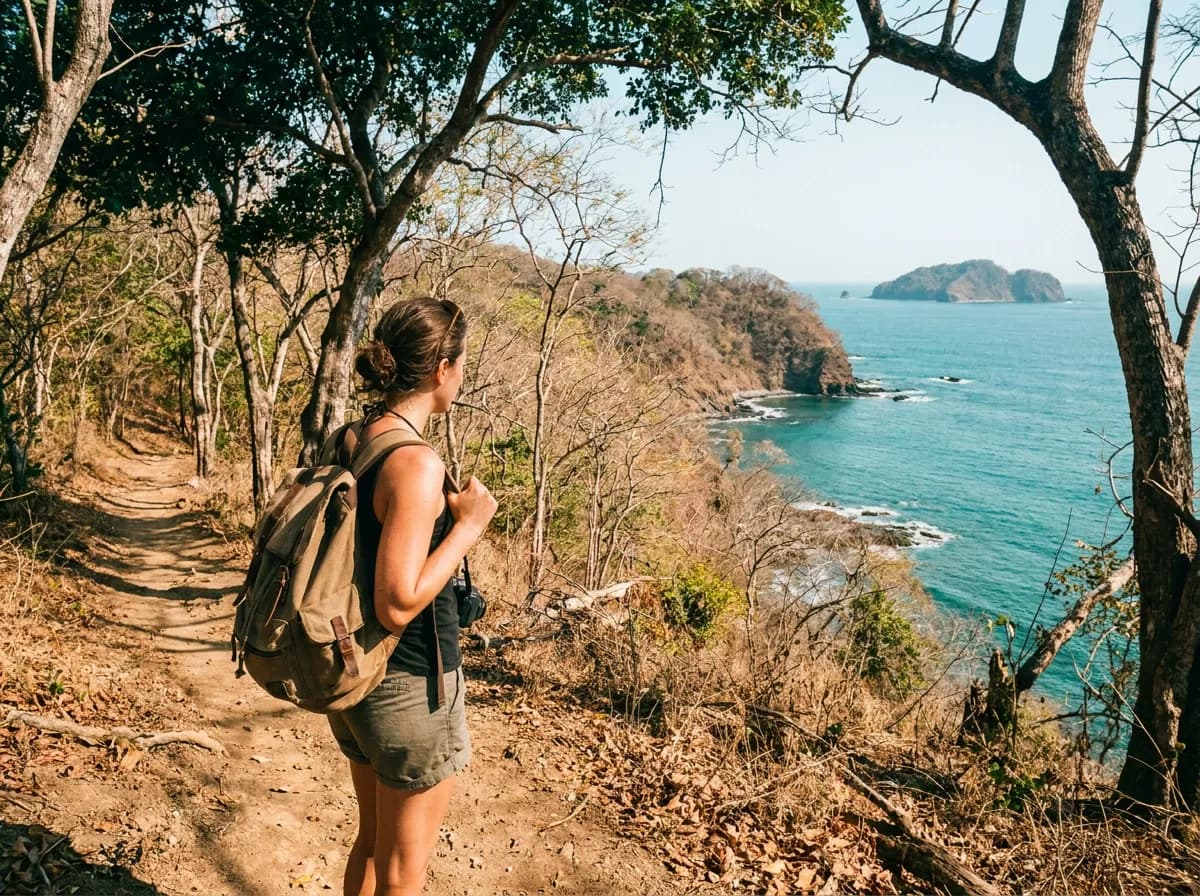
Sueco Trail is the main event. It runs 4 km one-way through dense primary forest and drops you at Playa Cabo Blanco on the peninsula's tip. Round trip is 8 km, and most people need 3-4 hours total, not counting beach time. There are steep descents, a river crossing, and sections where the canopy is so thick you forget you are in the tropics until the sweat reminds you. sallysees.com and costarica-spirit.com both flag the descent to the beach as genuinely steep. Hiking boots with ankle support are not optional here, they are the right call.
Danes Trail (Sendero Danes) is a shorter loop, roughly 1-2 km, that gives you good forest and solid birdwatching without committing to the full beach hike. If you have kids, limited time, or just want a taste of the ecosystem, this is a reasonable choice. It connects to the Sueco Trail if you change your mind midway.
Arboretum Trail is a short path near the ranger station. Worth a quick look if you arrive early and want to warm up your eyes before the main hike.
Timing Is Everything
Arrive at the gate right at 8am, or as close to it as you can manage. Wildlife activity drops off sharply after 9:30am according to multiple visitor reports on alltrails.com. The prime window for animal sightings is 8am to 9:30am. By 10:30am the forest goes quiet.
If you want to hike to the beach AND have actual time to swim and rest there, start the Sueco Trail no later than 9am. You need to be heading back from the beach by 2pm to exit before the 4pm close. The ranger staff will tell you the same thing.
Wildlife to Expect
Cabo Blanco covers 1,172 hectares of land and 1,790 hectares of marine area, and the "absolute" designation it carries means it has been left more intact than most parks in the country. That shows in the animal life.
On the trails, you have a realistic shot at:
- White-faced capuchin monkeys and howler monkeys, both common and often visible near the trailhead in the early hours
- Coatis, nosing through leaf litter along the path
- White-tailed deer, surprisingly calm around hikers according to sallysees.com
- Armadillos and anteaters, more often heard than seen
- Great curassows, a big dramatic bird that you will not forget if you spot one
- Land crabs, the red-and-purple kind that are everywhere on the Nicoya Peninsula but feel especially wild here
- Over 150 bird species including turquoise-browed motmots, trogons, manakins, and crested caracaras
On the coast and offshore, look for brown pelicans, magnificent frigatebirds, and brown boobies. Cabo Blanco island sits just offshore and is a nesting site for seabirds, though you cannot land on it. The marine reserve around the point protects a Pacific reef that is healthier than most on this coast, with parrotfish, puffer fish, and occasional Pacific hawksbill sea turtles visible from the beach.
The name "Cabo Blanco" (White Cape) comes from the guano on the offshore rocks. Now you know.
For more on what you might encounter across the wider peninsula, the wildlife-santa-teresa guide has useful context.
The Beach
Playa Cabo Blanco is the payoff. It is raw, white-sand, backed by cliffs, and accessible only by hiking or boat. There are a few picnic tables, an outdoor shower, and potable water at the beach, which is more than you might expect given how remote it feels. costaricavibes.com mentions a permanent hammock to the right of the beach access point, which is either still there or has been replaced by something similar. Check when you arrive.
The water is swimmable and the snorkeling around the rocky outcrops is genuinely good. Bring a mask if you have one. The beach has some stones mixed into the sand in spots, so water shoes are useful if you have them.
What to Pack
No food or water inside, and the hike is long and hot. Do not underestimate this.
- Water: Minimum 2 liters per person. More in wet season when the humidity is brutal.
- Snacks or a packed lunch. There is nothing to buy once you are inside, and you will be hungry by the time you reach the beach.
- Hiking boots or trail runners with ankle support. Sandals are possible on the Danes loop but not smart on the Sueco Trail.
- Swimsuit and a quick-dry towel if you plan to swim at the beach.
- Reef-safe sunscreen. The reserve is a marine protected area.
- Insect repellent. Bugs are not the worst in this forest but you are in the tropics.
- A waterproof bag or dry bag for your phone and anything you do not want soaked if the river crossing is high or rain hits.
- Binoculars if you are serious about birds. Worth every gram.
Check the packing-list-santa-teresa guide for general gear advice if you are still figuring out what to bring to the peninsula overall.
A Few Honest Notes
This is not a casual afternoon stroll. The Sueco Trail is a real hike with real elevation, real heat, and a river crossing that changes with the season. That said, reasonably fit people of most ages complete it fine. The alltrails.com reviews include 50-something hikers in Teva sandals who made it, so do not be intimidated, just be prepared.
Dry season (mid-December through mid-April) means easier trail conditions and more predictable weather, but also more visitors. Wet season means you may have the trail nearly to yourself, and the forest is dramatically green, but the river crossing is a real variable. For more on timing your trip, see the best-time-to-visit-santa-teresa guide.
If you are combining this with other day trips from the area, the day-trips-from-santa-teresa guide covers how to sequence Cabo Blanco with Montezuma, Cabuya, and other nearby spots.
FAQ
Is Cabo Blanco open every day? No. It is open Wednesday through Sunday, 8am to 4pm. Closed Monday and Tuesday. Plan accordingly.
How much does it cost to enter? $12 per person as of mid-2026. Confirm locally before you go as fees do occasionally change.
Do I need a guide? Not required, but a guide genuinely helps with wildlife spotting. The forest is dense and animals are easy to miss without trained eyes. Ask at your hotel in Santa Teresa or Montezuma about local guide options.
Can I swim at the beach? Yes. Playa Cabo Blanco is swimmable and the snorkeling around the rocky outcrops is good. Bring a mask and reef-safe sunscreen.
What if I am not fit enough for the full hike? Do the Danes Trail loop instead. It is 1-2 km, gives you forest and birds, and connects to the Sueco Trail if you want to push further. No shame in knowing your limits, especially in the heat.
Browse all active and outdoor options for the peninsula at /directory/activities.