Best beginner breaks, what a lesson costs, group vs private, board rental prices, and the safety stuff nobody tells you, from people who surf here.
You can stand up on your first day here. That's not a sales pitch, it's just the reality of learning in warm, consistent Pacific swell with a good instructor next to you in the water. But the gap between a mediocre lesson and a great one is real, and knowing where to go, what to pay, and what the ocean will actually throw at you makes the difference between a highlight of your trip and a frustrating morning.
The Beaches: Not All Sand Is Equal
People assume Santa Teresa is one long beginner-friendly stretch. It's more complicated than that.
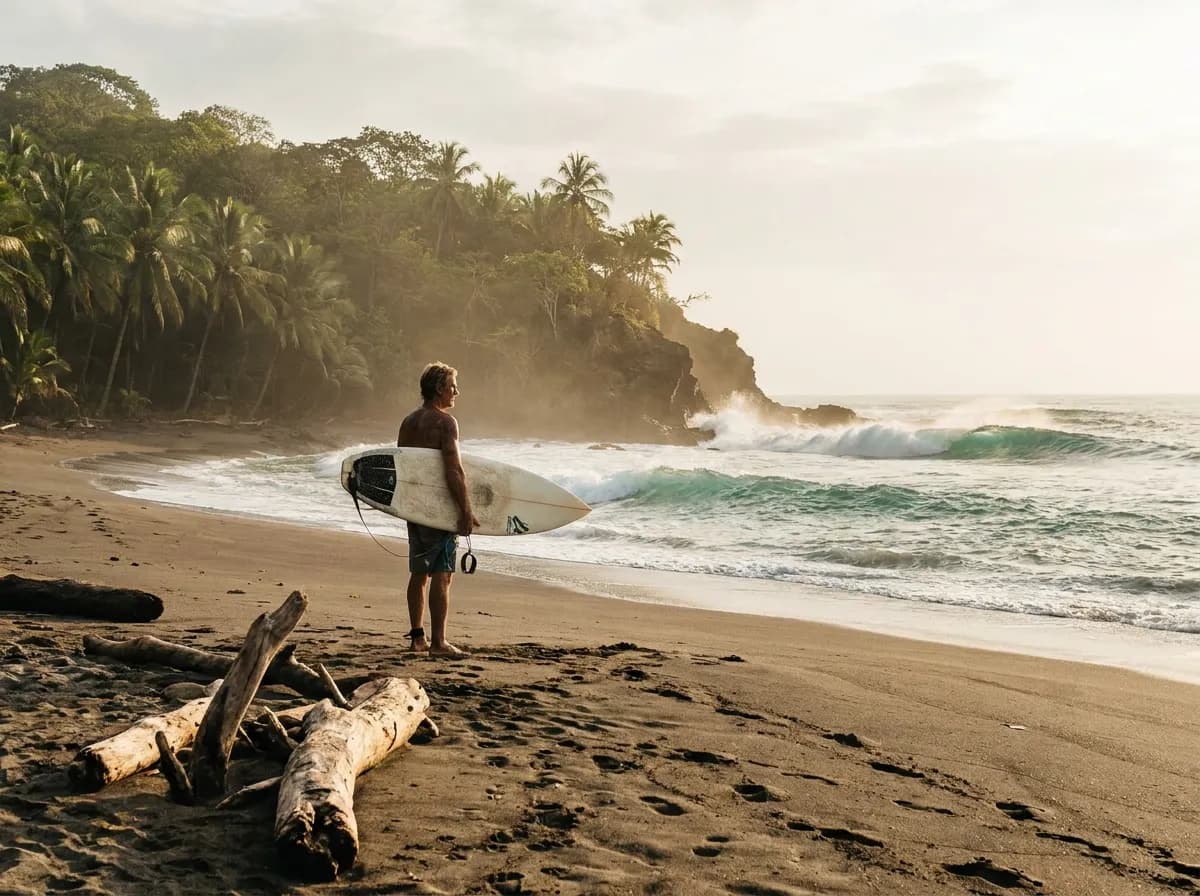
Playa Hermosa (the one just north of the main Santa Teresa strip, not the one near Jaco) is the best call for true beginners. Long sandy bottom, forgiving whitewater, predictable takeoffs. Most reputable schools run their beginner sessions here for exactly that reason, as per bluemysticsurf.com.
Playa Santa Teresa works fine on smaller days, but when the swell picks up it gets fast and punchy. You can go from "manageable" to "getting worked" in the span of a tide change. Instructors know this and will adjust, but if you're booking independently, check the forecast first. Our tide guide for surfers is worth bookmarking before you go.
Playa Carmen has reef sections and is better suited to people who already have some water comfort and want to work on paddling and positioning rather than first-timers trying to pop up for the first time.
For a fuller picture of the whole coastline, the surf guide for Santa Teresa breaks down every major break by skill level.
What a Lesson Actually Costs in 2026
Prices have crept up since the pandemic boom and haven't come back down. Here's what you're looking at as of mid-2026, confirmed across multiple schools operating here:
- Group lessons (90 min): roughly $60-98 per person depending on the school and group size. Salt Water Surfing Co. lists $85 for a group session with a maximum 3:1 student-to-instructor ratio, per saltwatersurfingco.com. Pacific Surf School runs group lessons at $98, per pacificsurf.com.
- Semi-private lessons (2-3 people, 90 min): $108-160 per person depending on the school.
- Private lessons (1:1, 90 min): $90-155 per person. Salt Water Surfing Co. charges $90-100, Pacific Surf School charges $155 for their private "Stoked Private" format.
- Multi-day camps and packages: start around $439 and up, confirm what's included because accommodation, photos, and transfers vary wildly by package.
Board and rashguard are almost always included in lesson pricing. Confirm before you book. Also confirm the student-to-instructor ratio in writing, because "group lesson" can mean anything from 3 students to 8 if a school is having a busy week.
Group vs. Private: The Honest Answer
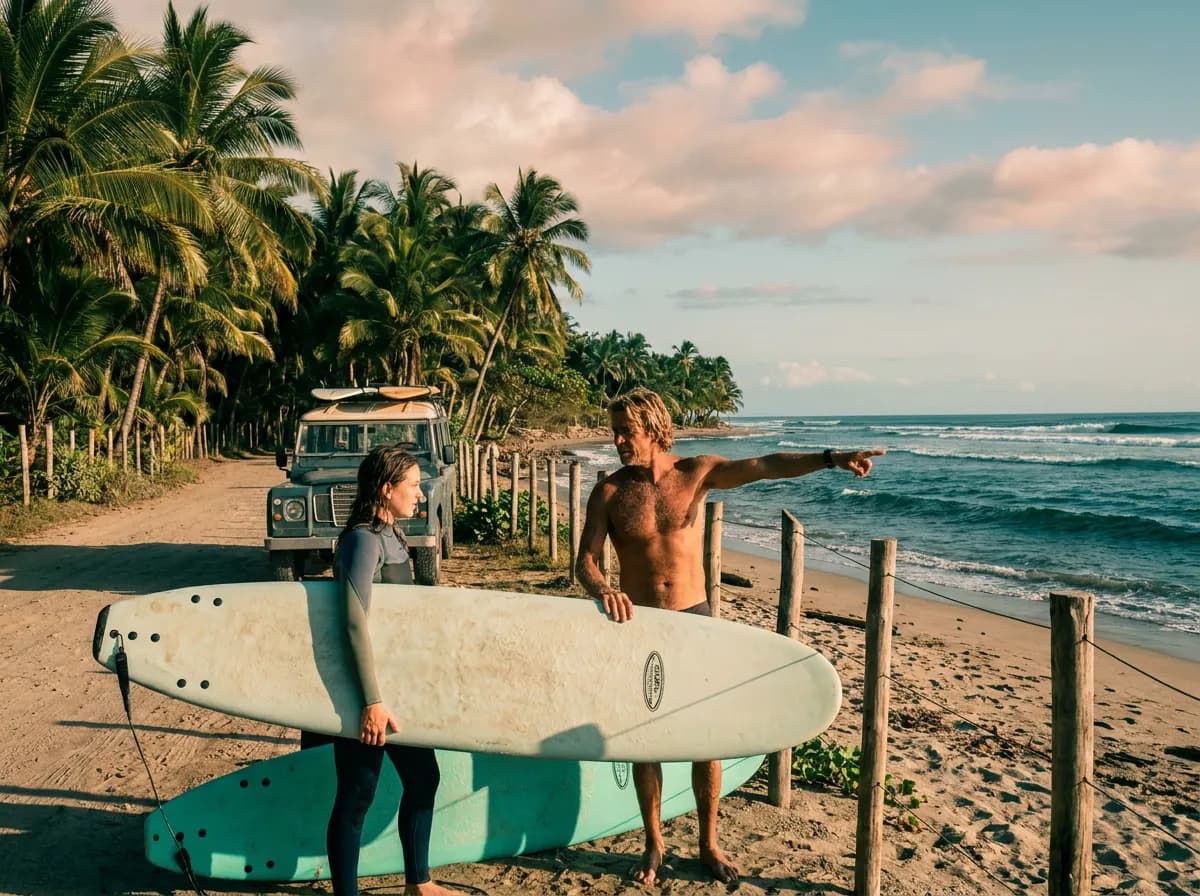
Group lessons are genuinely fine for most people. The social energy helps, you're not the only one falling, and the price difference is significant. If you're traveling with a partner or friends at a similar level, a semi-private session is often the sweet spot: you get more attention than a group and split the cost.
Go private if you have any of the following: previous water anxiety, a specific technique problem you want to fix, a physical limitation the instructor needs to know about, or you're a fast learner who will outpace a group within 20 minutes. Private lessons also make sense if you're only here for one or two days and want to maximize progress quickly.
Board Rentals When You're Ready to Go Solo
Once you've had a lesson or two and want to paddle out on your own, rental is the move. Prices from Salt Water Surfing Co. as of 2026, per saltwatersurfingco.com:
- Mid and longboards: $20-30 per day (full day, 7am-10pm)
- High-performance shortboards: $30 per day
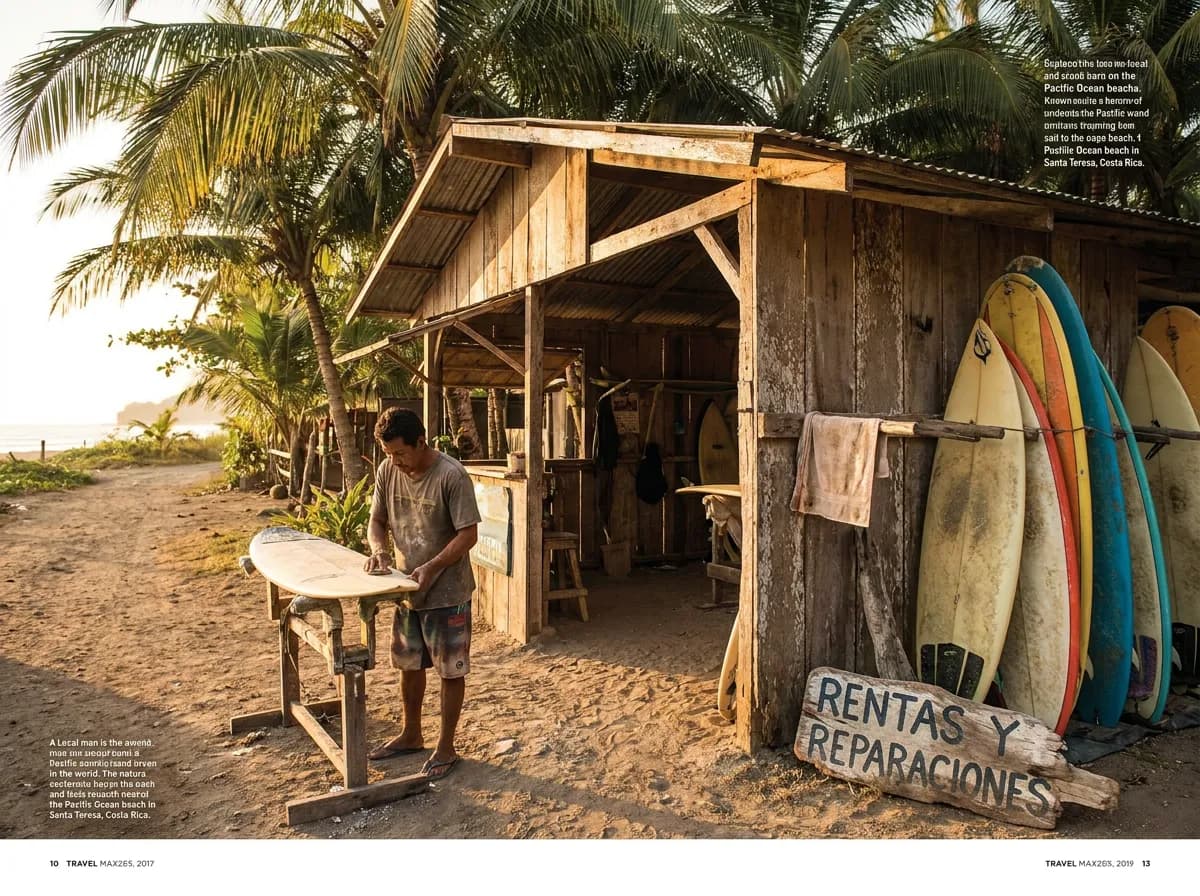
Most rental shops along the main road will be in a similar range. Our dedicated surfboard rental and repair guide covers which shops do same-day ding repair, which matters more than you'd think once you've met the reef.
The Safety Stuff Nobody Tells You
Every school will give you a beach briefing. Most are good. But here are the things that tend to get glossed over:
Rip currents are real and they move fast. Playa Hermosa is forgiving but not exempt. If you feel yourself being pulled sideways, don't fight it by paddling straight back to shore. Paddle parallel to the beach until you're out of the current, then come in. Your instructor should cover this. If they don't mention it, ask directly.
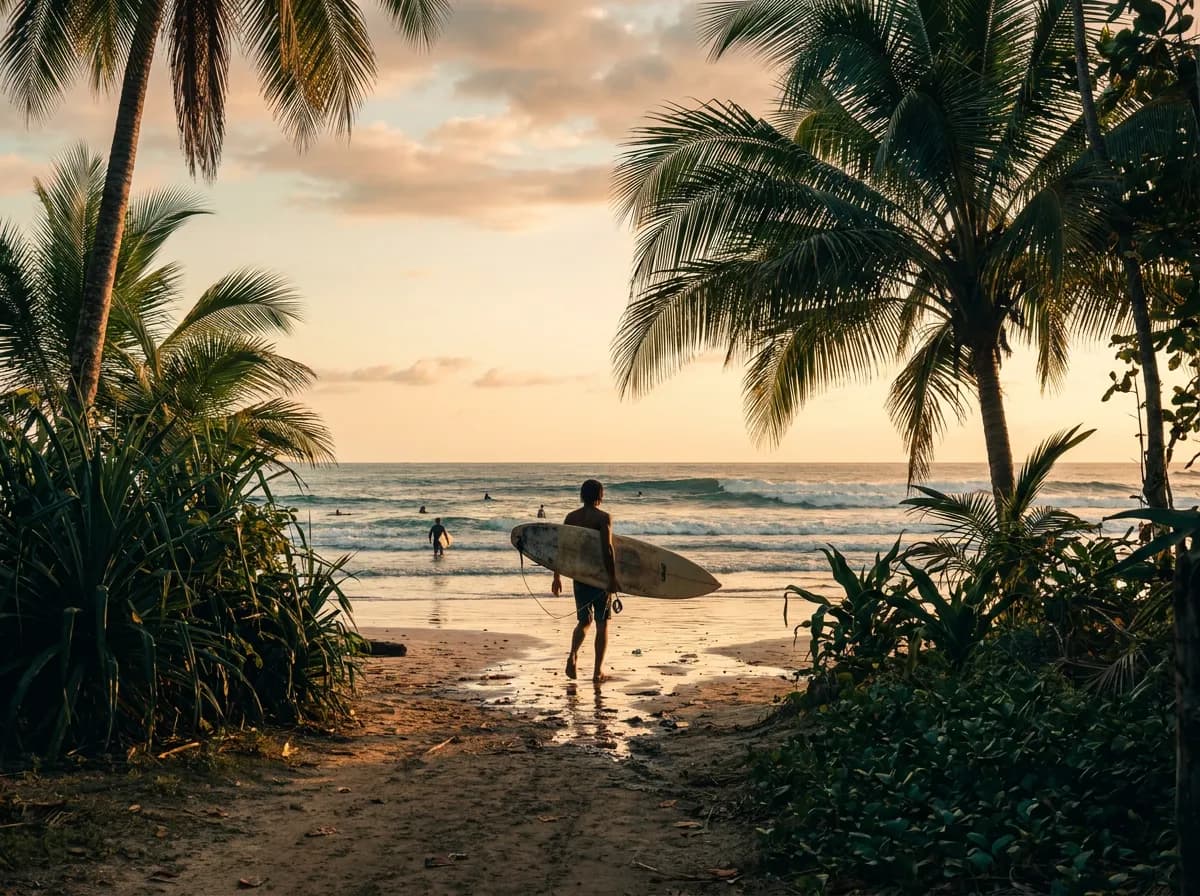
The swell changes with the tide. A calm morning can become a very different ocean by early afternoon. Beginners should surf the first two hours after sunrise. The water is calmer, the wind is lighter, and the crowds are thinner. bestsurfdestinations.com makes this point clearly and it matches what locals will tell you.
Ask about instructor certification. Reputable schools here use WSS (Water Safety Specialist) certified instructors or equivalent. Pacific Surf School specifies WSS and lifeguard certification. Salt Water Surfing Co. emphasizes CPR-certified instructors. It matters. Ask before you book.
Reef patches exist even on "sandy" beaches. At low tide, sections of Playa Santa Teresa expose shallow rock. Your instructor will steer you away from these, but knowing they exist helps you stay alert.
Sunscreen is not optional. Reef-safe only, please. The water is warm, you'll stay out longer than you planned, and the equatorial sun at 9am is already doing damage. Pack it in your bag the night before so you don't forget.
When to Come If You're a Beginner
The dry season (December through April) gives you smaller, cleaner waves and calmer mornings, which is genuinely easier for learning. But we won't pretend the green season is a washout. May through November brings bigger swell and more rain, but mornings are often still surfable and the crowds thin out considerably. If you're flexible on timing, our best time to visit guide and the Santa Teresa surf season guide will help you decide.
Getting There and Getting Around
The main surf schools are clustered along the Santa Teresa main road and near Playa Carmen. If you're staying further up in the hills, factor in transportation costs. ATV or motorbike rental runs $60-80 per day, per bestsurfdestinations.com, and steep roads make walking to the beach genuinely impractical from some spots. Our getting around Santa Teresa without a car guide is worth reading before you book accommodation.
For where to sleep near the water without blowing your budget, check the best hostels guide or beachfront hotels depending on what you're after.
FAQ
Do I need to book lessons in advance or can I just show up? In high season (December through April) and during holidays, book at least a few days ahead. In the green season you can often walk in, but calling ahead saves you a wasted trip. Most schools have WhatsApp numbers and respond quickly.
What should I wear in the water? A swimsuit and a rashguard. No wetsuit needed, the water sits around 27-29C year-round. Rashguards are usually included in lesson pricing but bring your own if you have one, especially if you burn easily.
Is Santa Teresa safe for kids learning to surf? Yes, with the right school and the right beach. Playa Hermosa's whitewater section is genuinely gentle. Several schools here run family lessons and are experienced with kids. See our Santa Teresa with kids guide for more on family logistics.
Can I progress from beginner to intermediate in one week? Realistically, you can go from zero to comfortably catching whitewater waves and beginning to angle your rides in a week of consistent daily surfing. Getting to the lineup and reading unbroken waves takes longer for most people. Camps that structure your week around two sessions per day accelerate this.
What if I get hurt? Minor wipeouts and board rash are normal. For anything more serious, Cobano has a clinic and there are pharmacies in town. Our healthcare and pharmacies guide covers your options. Travel insurance that covers water sports is strongly recommended before you arrive.
Browse all surf schools, rental shops, and instructors in one place at the /directory/surf hub.