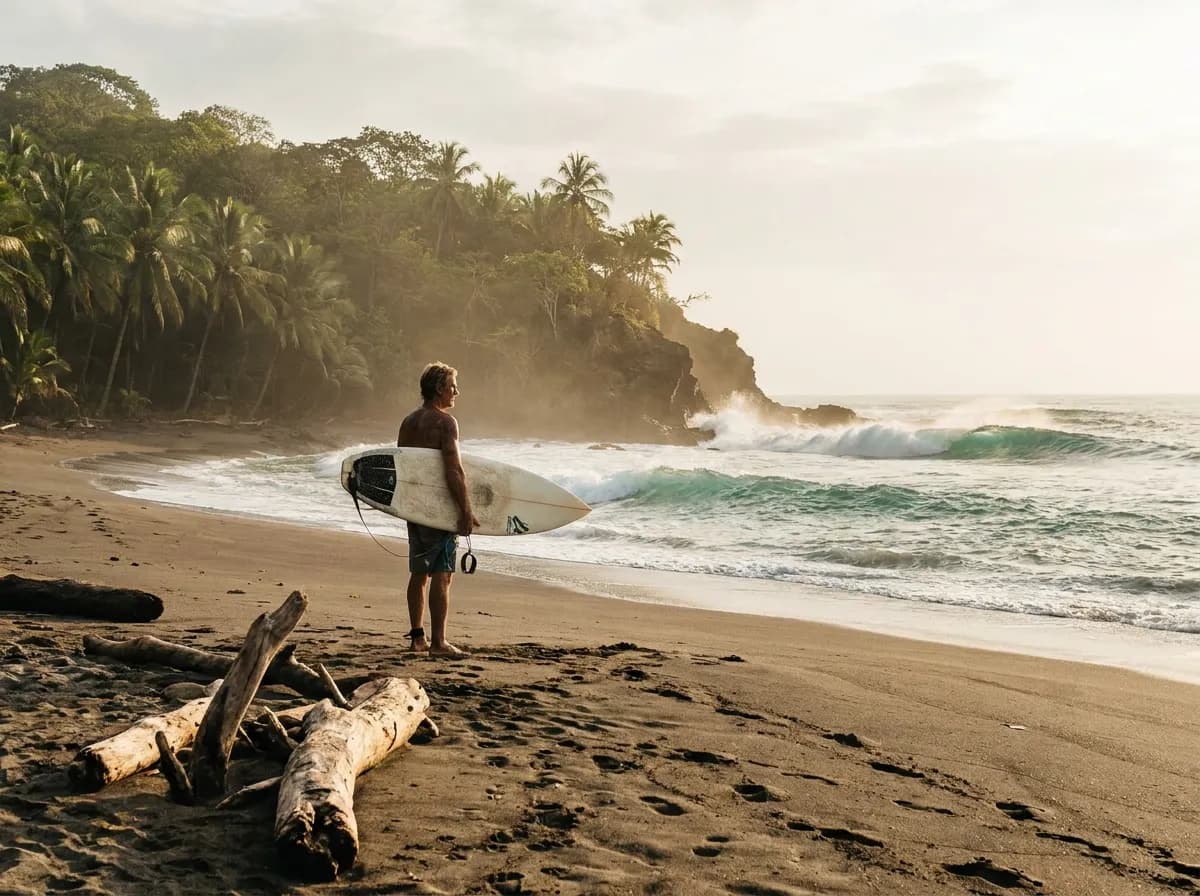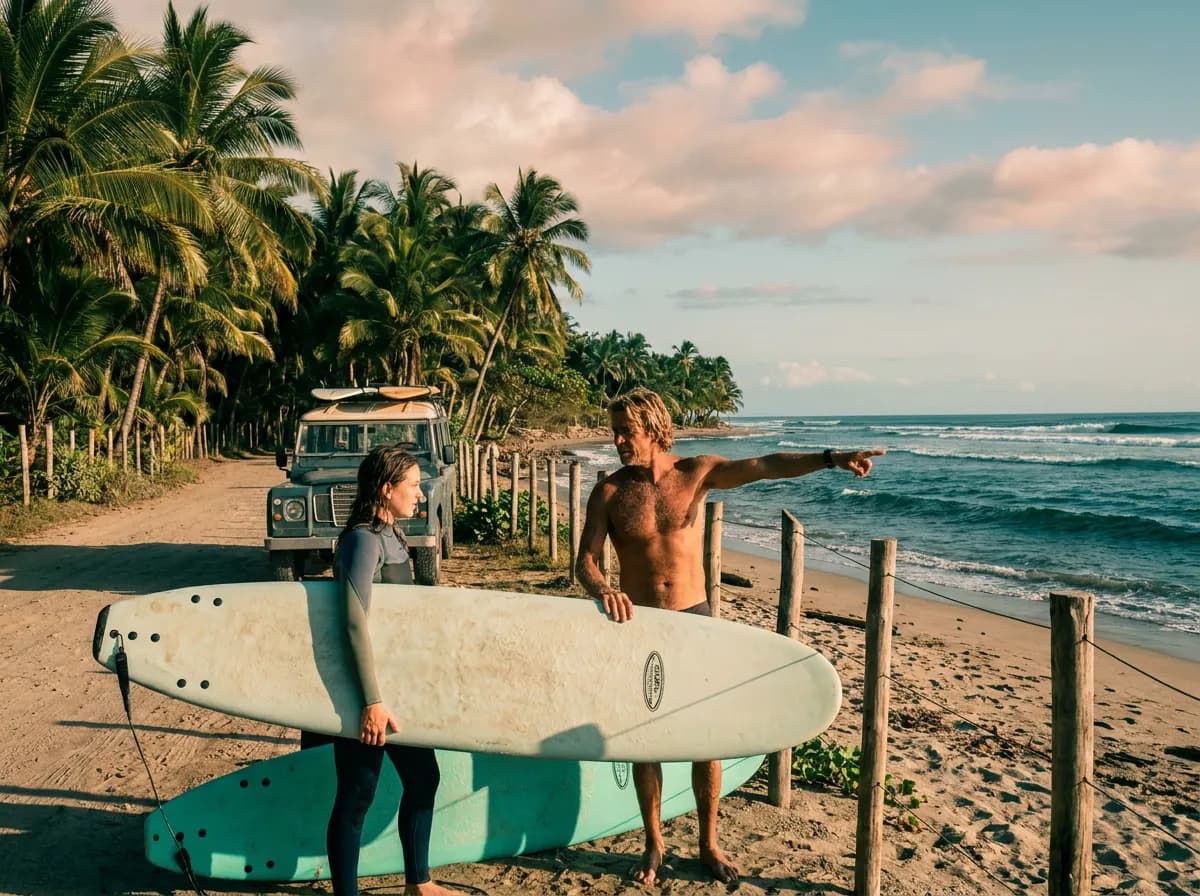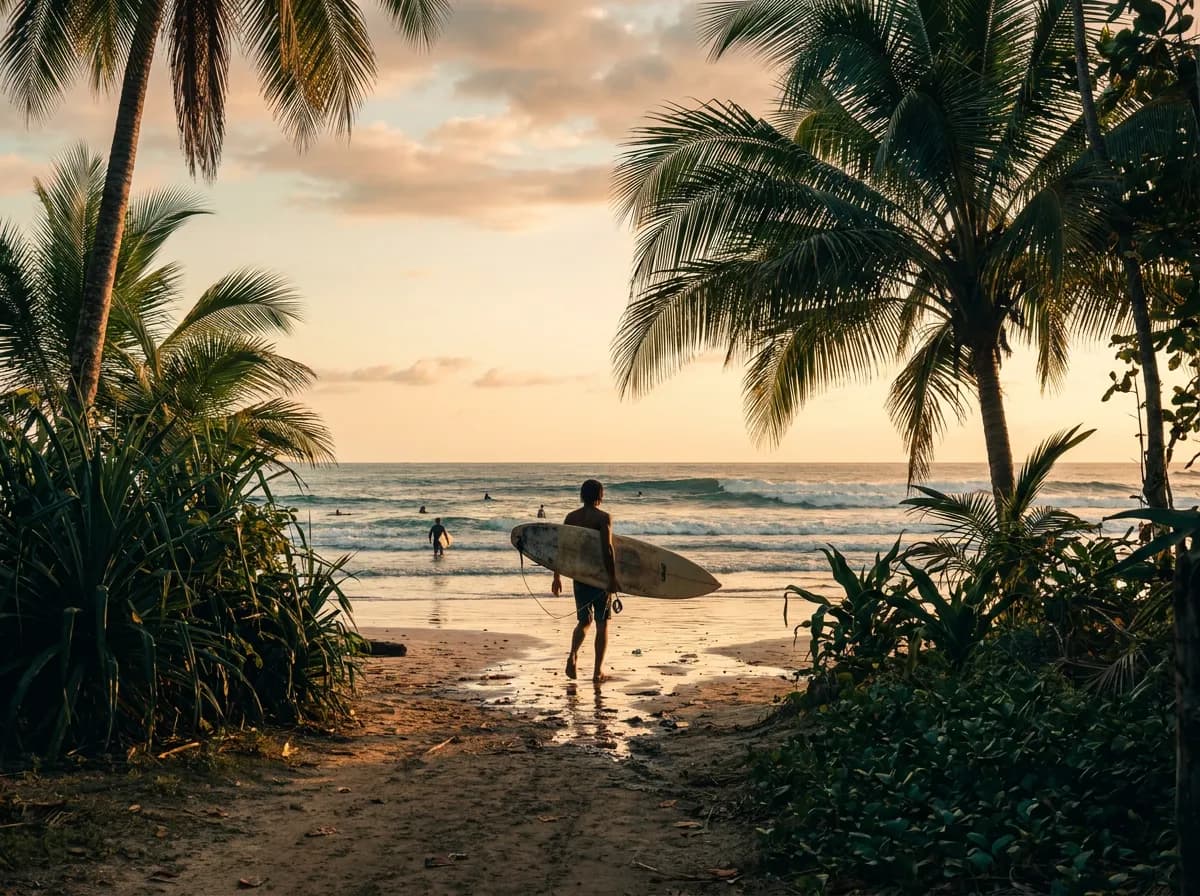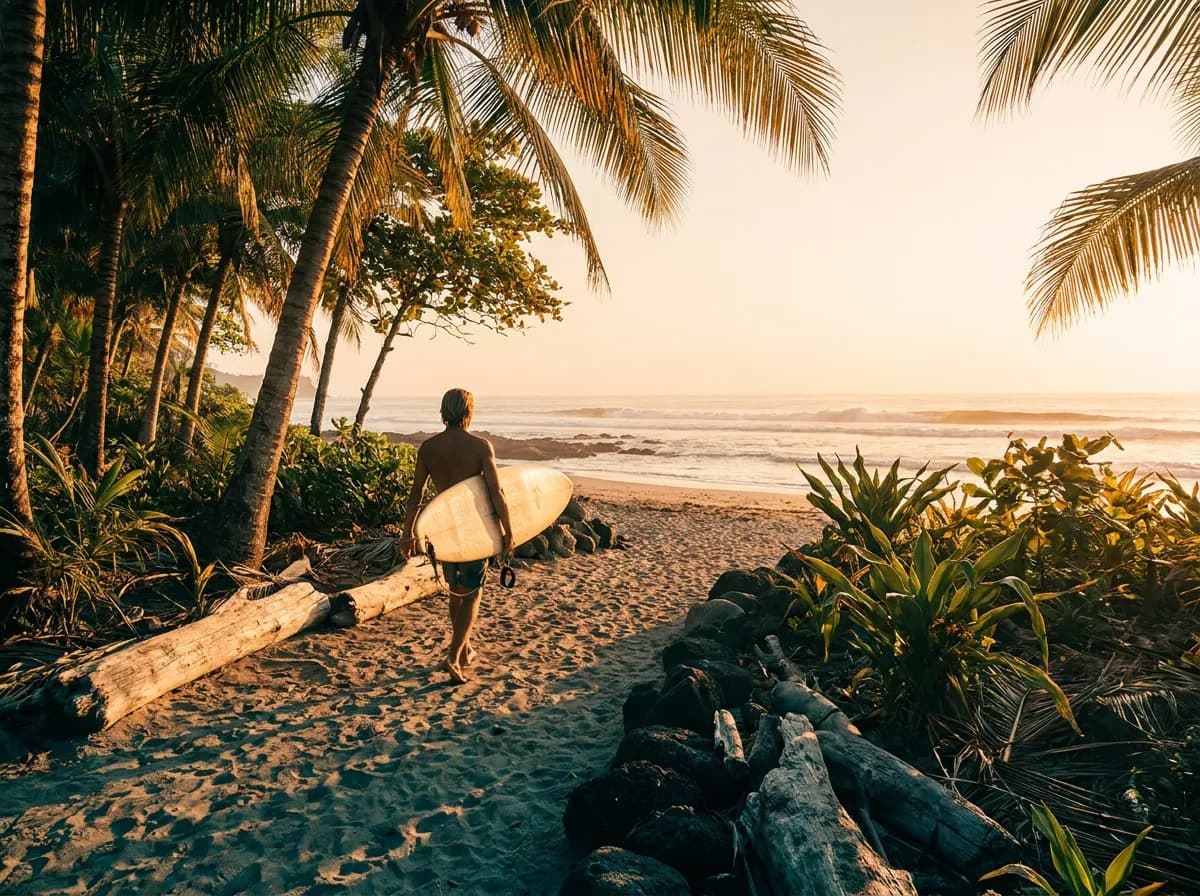
Every break in Santa Teresa and Malpais by skill level, Playa Hermosa, Suck Rock, Mar Azul, La Lora Reef, Playa Carmen, with honest notes on seasons, tides, etiquette, and where to rent.
You already know Santa Teresa has waves. What you need is the honest breakdown of which ones are actually worth your time, which ones will get you worked if you're not ready, and how to read the whole 15km stretch without wasting a session on the wrong beach at the wrong tide. Here it is.
The Big Picture: How This Coastline Works
The surf zone runs roughly from Playa Hermosa in the north down through Playa Santa Teresa, past La Lora, through Playa Carmen, and into the Mal Pais reef setups at the southern end. The main road follows the coast the whole way, so you can drive or ride your quad north or south in minutes and pick your spot based on conditions that day.
A few things stay true regardless of where you paddle out:
- Offshore winds blow from the southeast (northeast in peak swell season). First light is almost always cleaner. By 9am the onshore trades arrive and chop things up. Set your alarm.
- Water temperature is 26-29°C year-round. No wetsuit, ever. Reef booties are worth considering at the rocky breaks.
- Swell season peaks May through November, driven by Southern Hemisphere winter ground swells marching up the Pacific. December through April goes smaller and sunnier, which is when the town fills with beginners and the lineup at Carmen gets very crowded with surf school groups.
- Rips run strong with size. Read the beach from the sand before you paddle. After heavy rain, water quality near the estuary mouth can degrade, so check conditions if it poured the night before.
For a deeper look at timing your trip around swell cycles, see the santa-teresa-surf-season-guide and the tide-guide-santa-teresa-surfers.
Playa Hermosa (North End): Best for Beginners and Longboarders
Hermosa sits north of town where the jungle spills right onto the sand. The waves here are soft, rolling, and forgiving. Long period swells arrive with less punch than further south, making this the best place on the strip to learn your pop-up or cruise a longboard without getting destroyed.
Several surf schools use Hermosa for lessons precisely because the bottom is sandy and the crowd is lighter. If you're just starting out, this is your beach. Check the learn-to-surf-santa-teresa guide for school recommendations and pricing before you book.
Works on most tides. Not worth the trip if you're an intermediate or above looking for something with teeth.
La Lora: The Heart of Town, Intermediate to Advanced
La Lora sits in the center of Santa Teresa, steps from the main strip of restaurants and shops. It's a beach break with a right-hand tendency, clean rights and lefts on good days, fast sections, and consistent swell. Conditions sharpen at low to mid tide, according to hotelfermata.com.
This is where capable locals and traveling intermediates spend most of their time. The lineup is competitive. Surf school groups populate the inside, shortboarders and experienced surfers work the better peaks further out. Respect the pecking order. Don't snake locals. Don't paddle into the learner zones at speed.
The surfing window can be short at La Lora because the tide matters a lot here. Check the charts before you walk down, or you'll arrive at a closeout and waste the morning.
Playa Santa Teresa (Main Break): Intermediate to Advanced
The main event. A long arc of exposed Pacific beach break producing punchy lefts and rights on northwest and southwest swells. Multiple peaks shift with the sandbanks, so scout from the beach first and pick the peak that's actually breaking cleanly rather than just paddling out at the nearest entry point, as noted by tripbase.com.
On a proper southwest ground swell this beach delivers hollow sections, fast walls, and shorebreak with genuine consequence. The working size range is 3-8ft. Below 3ft it goes flat. Above 8ft it tends to close out, per surftrips.co. Bottom is a mix of sand and submerged reef, so urchins are a real consideration on the reefy sub-peaks.
Best sessions: dawn, rising tide, southeast offshore winds. If you're here in the shoulder months of May or November you can catch the rare combination of swell, offshore winds, and a thinner crowd.
Playa Carmen: Beginner to Intermediate, Reliable Year-Round
Carmen anchors the south end of the main beach zone, near the Mal Pais crossroads. Sandy bottom, multiple peaks, shorter and softer waves than Santa Teresa proper. Both lefts and rights break here. It's the most forgiving entry on the strip and the most consistent when Santa Teresa is maxed or too messy, per surftrips.co.
The honest downside: during dry season (December through April) Carmen gets absolutely packed with surf school students. If you're an improver who wants some space to practice turns, come early or come in the wet season when the crowds thin and the swell picks up.
Works on all tides, though lower tide tends to produce better shape.
Suck Rock (Rocamar): Advanced Only
Near the northern end of Playa Santa Teresa, Suck Rock is the break that gets talked about most and surfed well by the fewest. It's a powerful right-hand point that works best on solid swell and higher tide. Steep drops, fast barrels, exposed lava underneath. hotelfermata.com puts it plainly: only advanced surfers comfortable in heavy conditions should attempt it.
If you're asking whether you're ready for Suck Rock, you're probably not. Go surf La Lora for a few days first and see how you handle the main break on a bigger day. Then reassess.
Mal Pais Point and Sunset Reef: Advanced, Swell-Dependent
At the southern end of the strip, the coastline transitions from beach break to reef and point setups. Mal Pais Point is a rocky right-hand point break that unloads hollow, ledging rides over a lava shelf at low tide. On a clean 6-8ft southwest ground swell day, it's one of the better waves in Central America, full stop, per tripbase.com. The channel exit is technical. Check the tide before you paddle out. Do not attempt this on your first week in town.
Sunset Reef at the far southern end offers a heavy left-hand tube for experienced surfers on solid southwest swell. It doesn't work as often as the other breaks, but when it does, it's worth the trip south.
For the full rundown on these heavier spots, see the advanced-surf-spots-santa-teresa guide.
Mar Azul: The Hidden One
Mar Azul requires a short hike to reach and the payoff is a left-hand point break suited to intermediates and above. It's rarely crowded, which in Santa Teresa in 2026 is genuinely rare. The trade-off is that it's more work to get to and demands some knowledge of the local terrain. Good option if you want a quiet session away from the main circus. Confirm access locally before you make the walk.
Where to Rent and Get Your Board Repaired
The main road through Santa Teresa has no shortage of board rental shops. You'll find shortboards, fish, funboards, and longboards available. Expect to pay in the range of 20-40 USD per day for a rental as of mid-2026, though prices shift seasonally, so confirm locally. For the most current shop recommendations, see the surf-board-rental-repair-santa-teresa guide and browse the /directory/surf listings.
Etiquette, Honestly
This lineup is on the global surf map and the crowd reflects it. A few things that will make you less of a problem:
- Don't drop in. The person closest to the peak has priority. Full stop.
- Locals hold priority at the reef sections. They surf here every day. You're visiting.
- Stay out of the surf school zones if you're surfing at speed. Those inside sections are for learners working on their pop-ups, not for you to barrel through.
- Don't paddle out at Suck Rock or Mal Pais Point if you're not genuinely experienced. It's not about ego, it's about not getting hurt and not putting other people at risk.
For the full picture on getting around between breaks without a car, see getting-around-santa-teresa-without-car.
FAQ
What's the best break for a complete beginner? Playa Hermosa or Playa Carmen. Both have sandy bottoms, softer waves, and surf schools nearby. Carmen is more central and more consistent but gets crowded in dry season.
When is the water biggest? May through November, when Southern Hemisphere winter ground swells push up the Pacific. Expect 4-8ft on good days, occasionally more at the reef breaks.
Do I need a wetsuit? No. Water sits at 26-29°C year-round. Reef booties are worth having if you plan to surf Mal Pais Point or Suck Rock.
Is Suck Rock as scary as it sounds? Yes. Fast, shallow, heavy. Intermediate surfers should leave it alone and spend their sessions building up at La Lora or the main Santa Teresa break first.
What time should I be in the water? Dawn. The offshore winds hold through roughly 9am, then the onshore trades arrive and conditions deteriorate. Early sessions are also less crowded.
Browse every surf shop, school, and rental option in one place at the /directory/surf hub.