The best underwater spots near Santa Teresa and the Nicoya Peninsula, visibility, marine life, and operators.
The underwater world around Santa Teresa and the southern Nicoya Peninsula is genuinely wild, raw, and unlike anything you'll find on the Caribbean side. This is Pacific diving: strong currents, volcanic rock formations, surprising pelagic encounters, and visibility that humbles you. Here's what's actually worth your time in the water.
The Honest Truth About Visibility
Let's get this out of the way first, because nobody should fly here specifically for world-class diving. "Santa Teresa diving is raw Pacific Ocean diving, with strong current, limited visibility, deep profiles, and an edgier feel than most tropical destinations." Visibility averages between 2 and 7 meters, and that's on a decent day. The dry season from December through April generally offers the best diving conditions. Even then, a reviewer who dove in late January reported limited vis. Visibility at the end of November was reported at 20-30 feet, so the green season isn't automatically a write-off either.
The upside? The shipwreck dive with whale sounds and shark encounters is genuinely one of the most unique dives you can log. If you're already here for the surf or the wellness scene, adding a dive or two makes total sense. If you're flying here just to dive, look at Cocos Island or the Caribbean first.
The Best Dive Sites
The Nicoya Peninsula has dive sites spread across three main zones: the Malpaís/Santa Teresa/Cabuya cluster, the Montezuma/Tambor area, and the Islas Tortugas. The sites closest to Santa Teresa are the most accessible on a day trip.
Local sites (Malpaís to Cabuya zone):
- Cadena, Tortilla, Tiburón, El Secreto are the bread-and-butter reef dives. Sites like Tortilla and Cadena are where you'll see tons of marine life if you have a sharp-eyed guide.
- El Barco is the shipwreck. The first dive on the wreck is one of the most eerie experiences you can have, with whale cries audible through the water.
- La Pared (The Wall) runs shallower, with a maximum depth of 74 feet and an average of 44 feet, essentially swimming along a wall formation looking for marine life tucked into the reef.
Further out (Islas Tortugas zone):
The Islas Tortugas cluster includes sites like El Acuario, La Cueva, La Punta, Mantas, and Morteros. Tortuga Island offers calm, turquoise waters with visibility of up to 25 meters on a clear day, which is a significant upgrade from the local sites. The tradeoff is a longer boat ride.
What You'll Actually See
During dives around Cabo Blanco, you can encounter whitetip reef sharks, spot tail grunts, porkfish, turtles, eels, octopuses, and even manta rays. Sharks are present but not aggressive. Standard shark encounter protocols apply: don't panic, maintain visual contact, and give them space.
Whale season is a genuine highlight here. Northern humpback whales can be spotted between December and April, while southern humpbacks come between July and the beginning of November. That means you have roughly nine months of the year with a real shot at an encounter. Dive masters have been known to spot humpbacks on the way to the first site, and good operators will take their time following them. Hearing whale song underwater while exploring a wreck is something people genuinely don't forget.
Manta rays can be found in these waters between November and May. They're not guaranteed, but they show up often enough that operators run specific manta-focused dives.
The Operators Worth Knowing
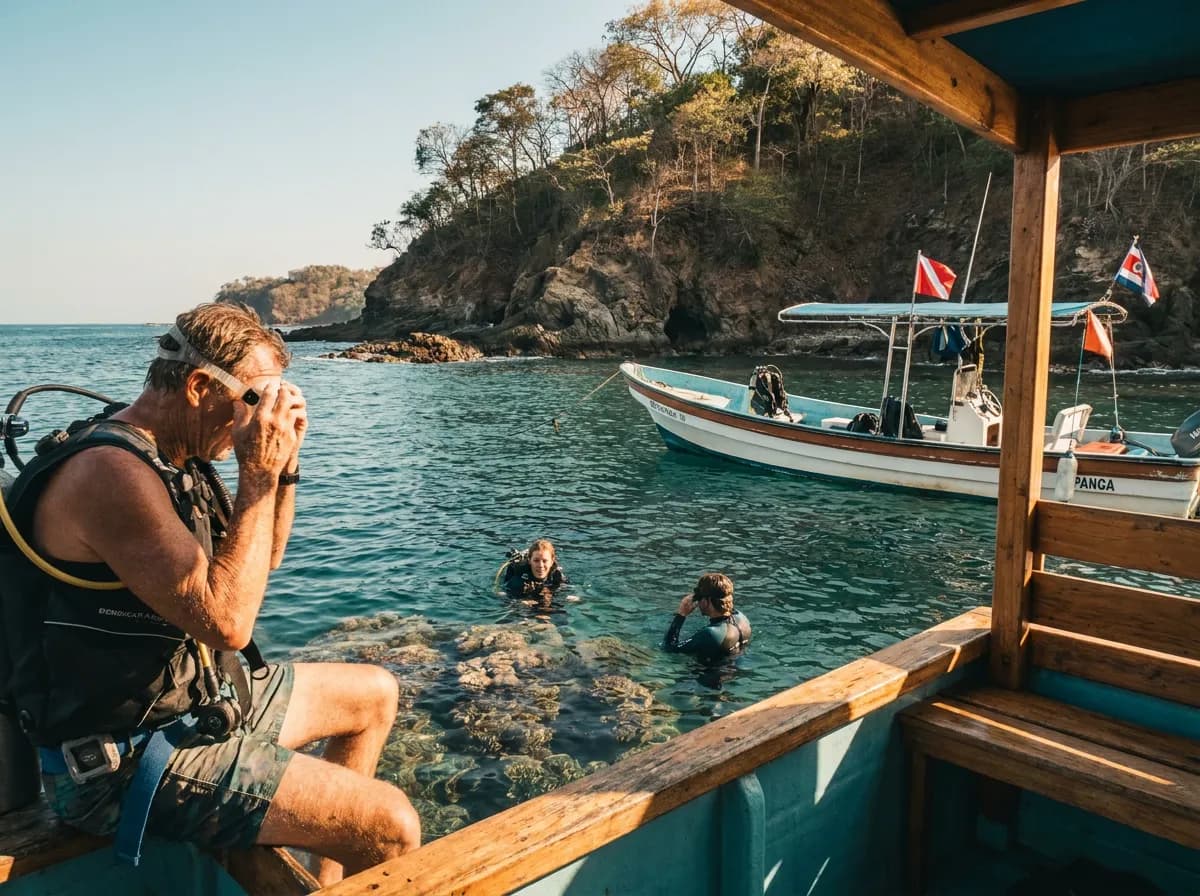
Iguana Divers is the original. They established the first dive centre in Santa Teresa in 2014 and operate as a PADI 5 Star Dive Centre committed to marine conservation and quality diver training. They go out for two-dive outings, each about 50 minutes long, to different sites around the Santa Teresa/Cabuya area, keeping groups small for a personalized experience. They teach a full range of PADI courses, from Discover Scuba Diving to Divemaster. Their shop is at Plaza Kahuna. Prices for a Discover Scuba experience run approximately $185 (confirm directly, as of 2026). Note that prices do not include transportation between the dive center, your hotel, and the boat. Contact them via WhatsApp at +506 8438 5887 or email info@iguanadivers.com.
Ananda Dive N' Flow is based in Malpaís, a few minutes south of Santa Teresa's main drag. They offer SSI and PADI certifications as well as AIDA freediving certification. They're the operator to know if freediving is your thing. Their intro freediving course covers relaxation techniques, breathholds, finning, duck dives, and mental focus, and is specifically recommended for surfers who want more confidence with breath holds and oxygen management. A non-refundable fee of $230 applies upon booking a course, covering your e-learning access. Check their pricing page directly at ananda.cr/pricing for current full-course rates, as these shift. Reviews consistently single out instructor Raphaela by name.
Both operators run Islas Tortugas day trips as well, which is worth considering if you want calmer, clearer water.
Snorkeling Without a Dive Cert
You don't need to get on a boat to see something interesting. A few spots work well for independent snorkeling:
- The Giant Natural Pool sits on the way from Santa Teresa to Playa Hermosa, accessible at low tide. Walk on the rocks to find it and expect colorful fish and vibrant coral. It's good for kids too.
- Mal Pais Reef is a lesser-known spot accessible via a short hike from the main road, ending at Playa Suecos, with a stunning coral reef and plenty of marine life.
- Cabo Blanco Absolute Reserve at the southern tip of the peninsula offers pristine snorkeling water with sea turtles and schools of fish. Budget for about a 4km walk from the entrance to the first snorkeling beach. Pair this with the hiking guide for Cabo Blanco.
Timing matters: snorkel at low or medium tide. High tide is not recommended because all spots are rocky and visibility of the rocks is poor.
There are no rental shops for snorkel gear near the beaches. Your best option is to buy gear at one of the local supermarkets (Mega Super, Ronny's, Super Muralla) for around $10. Tours to Isla Tortuga and Mal Pais include equipment.
The Isla Tortuga Day Trip
This is the most popular underwater day out from Santa Teresa, and for good reason. The tour starts with a 50-minute boat ride along the Nicoya coast, with a real chance of seeing dolphins, jumping manta rays, turtles, or humpback whales along the way. The volcanic rock reef at Tortuga is surrounded by crystalline waters and is home to angelfish, porcupine fish, morays, needlefish, and spotted eagle rays.
Zuma Tours is the most established operator for this run. The Tortuga Island tour costs around $99 from Santa Teresa (transport included), versus less if you make your own way to Montezuma first. The standard adult price from other operators runs around $107 USD per person including taxes, with children aged 4-10 at $92. Confirm locally, as of 2026, since these prices have been creeping up annually. The full tour from boat ride to snorkeling and beach time takes around 6 to 7 hours.
A note on the Tortuga snorkeling itself: the snorkeling area around the main rock can get crowded with multiple tour boats arriving at the same time. Go on a weekday if possible, and consider bringing your own mask if the fit matters to you.
This trip connects naturally with a day trip from Santa Teresa if you want to extend it into a Montezuma afternoon.
Practical Notes
- Seasickness: The Pacific crossing to Tortuga can be rough, especially in the green season. Take something the night before if you're prone.
- Sun: You will burn. The water reflects everything. Reef-safe sunscreen only, and bring a rash guard.
- Gear rental: Both Iguana Divers and Ananda include all necessary equipment in their dive trips. All activities include the necessary gear as well as a simple snack of fruit, cookies, and water.
- Certification courses: The PADI Open Water Diver course at Iguana Divers is a globally recognized certification designed to equip you with fundamental skills for independent scuba diving. Completing it here is genuinely good value compared to doing it at home.
- Check the tide guide before planning any beach snorkeling. Low tide windows are short and move daily.
FAQ
Is Santa Teresa worth visiting just for diving? Honestly, no. "If you want clear water and easy reef diving, Santa Teresa is likely not your first choice." But if you're already here for surf or wellness, adding a two-tank dive is absolutely worth it, especially if you catch the whales.
When is the best time to dive near Santa Teresa? The dry season from December through April generally offers the best conditions. For whale watching underwater, northern humpbacks run December to April and southern humpbacks July to early November.
Do I need a certification to get in the water? No. Both Iguana Divers and Ananda offer Discover Scuba Diving (no cert required), and there are free snorkeling spots accessible directly from the beach. Isla Tortuga tours are also open to non-certified snorkelers.
Can I rent snorkel gear locally without booking a tour? There are no rental shops near the beaches. Buy gear at a local supermarket for around $10. Alternatively, both dive operators include gear in their guided trips.
Is it safe to snorkel alone at the natural pools? The natural pools near Santa Teresa are generally calm at low tide and fine for confident swimmers. Go with a buddy, check the tide, and don't push into areas with surge. The Cabo Blanco reserve snorkeling requires a guide by park rules.
Browse all water-based and land activities in the area at the /directory/activities hub.