Not a market, a social event with food. What to expect, when to arrive, and what's worth buying.
If you've been here more than a week, someone has already told you about Thursday night. It's not really a market, it's the weekly social reset for the whole stretch from Carmen to Mal Pais, and if you show up at the wrong time or with the wrong expectations, you'll miss what makes it worth going.
What It Actually Is
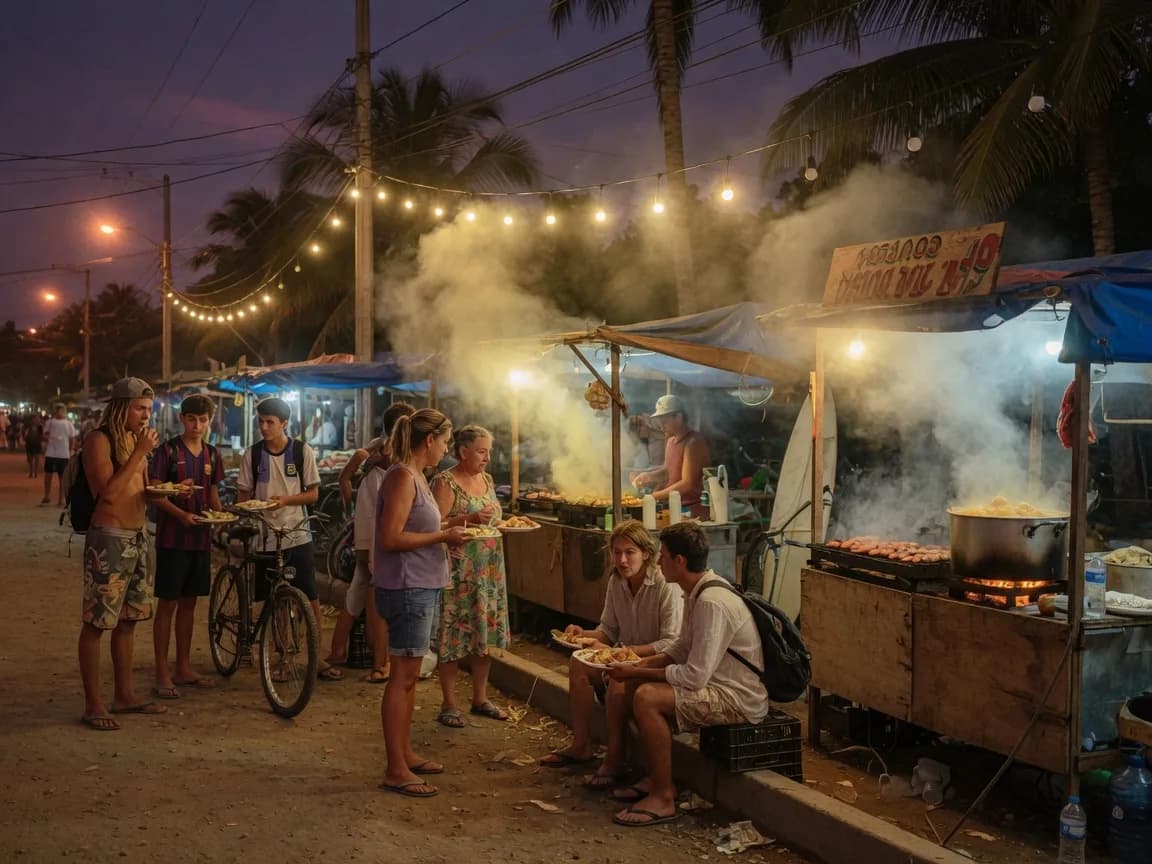
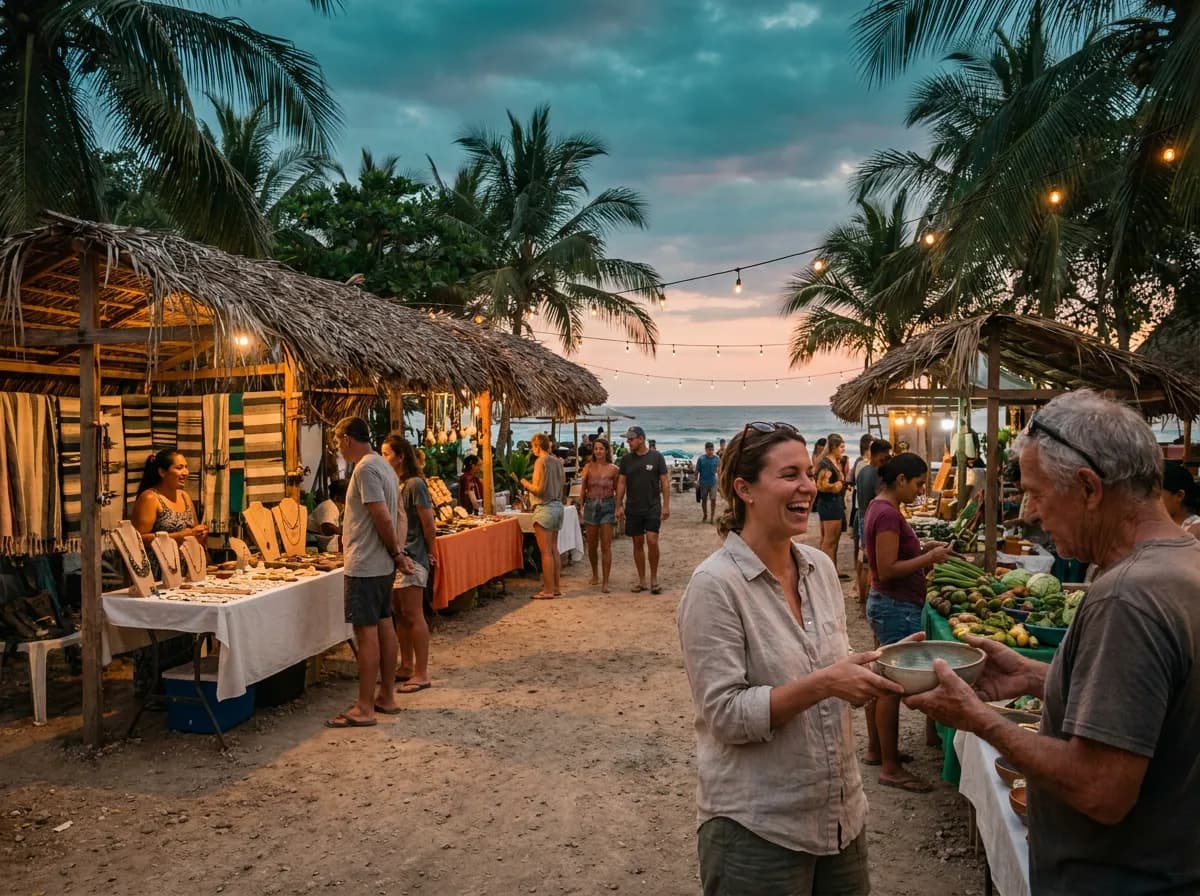
People call it the Thursday Market, but that label undersells it. Yes, there are vendors with handmade jewelry, crystals, sarongs, and the occasional decent piece of local art. But the real draw is the food, the crowd, and the fact that everyone shows up at the same time in the same place. Expats who've been hiding in their rentals all week, surf instructors who are usually on the beach at dawn, families, digital nomads, and travelers who just got off the ferry all converge here. It's the closest thing Santa Teresa has to a town square moment.
Think of it as a warm-up to the rest of the night. The full evening, market then La Lora, is in Thursday night in Santa Teresa. allworld.com confirms Thursday and Saturday as the main nights at La Lora Amarilla. The market feeds directly into that energy.
When to Arrive
This is the most practical piece of advice: don't arrive late. The food vendors sell out. The best empanadas, the wood-fired pizza, the fresh ceviche, the good tamales, they're gone by 8 PM on a busy week. Show up between 6 and 6:30 PM. You get the golden hour light, the food is still fully stocked, and you can actually walk around without being shoulder to shoulder.
By 7:30 PM the main road slows to a crawl and parking (if you drove or rode a quad) becomes a headache. If you're on foot or a bike, none of that matters, but keep it in mind. For getting around without a vehicle, check the getting-around-santa-teresa-without-car guide before Thursday.
The Food: What's Worth It
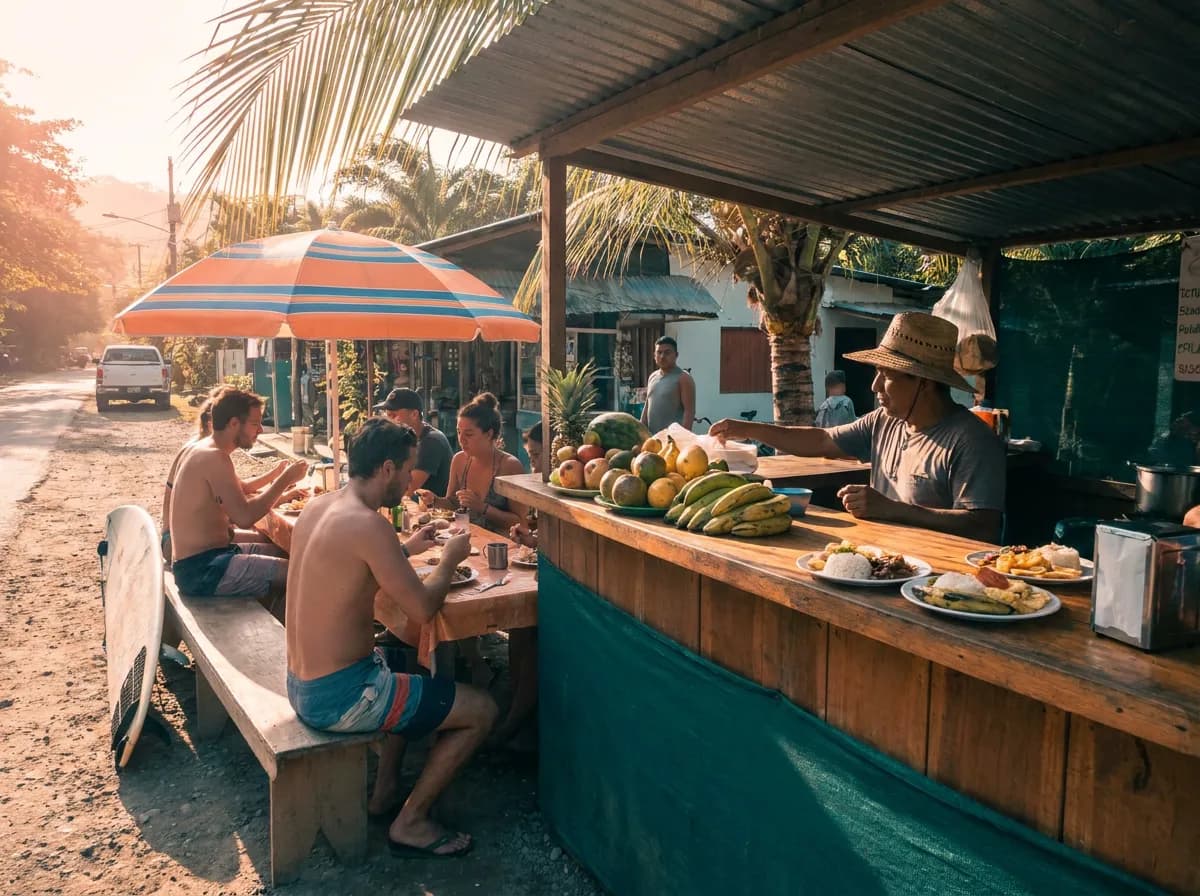
This is where you spend your money. The craft goods are fine, some of it is genuinely beautiful, but the food stalls are the reason to come hungry.
What to look for:
- Empanadas and patacones from the local Tico vendors. These are usually the cheapest and most satisfying thing on offer, in the 1,000-2,000 colones range per piece (roughly 2-4 USD as of 2026, confirm locally since prices shift with the exchange rate).
- Fresh ceviche sold by the cup. Quality varies by vendor, so follow the line. If locals are queued up, that's your signal.
- Wood-fired pizza from one of the pop-up setups. Prices run around 8-14 USD for a personal pie. Worth it if the crust is right, skip it if the line is 20 minutes deep and the dough looks pale.
- Smoothies and fresh juices. Several vendors set up blenders. A large smoothie runs 4-7 USD typically.
- Tacos and rice bowls. Usually a couple of stalls doing solid versions of both. Good option if you want something filling before a longer night.
We won't pretend everything is great. Some of the prepared food stalls are mediocre and overpriced, banking on the foot traffic rather than the quality. Use your eyes: look for the setups that are actually cooking in front of you, not just reheating.
For a broader sense of where to eat well any night of the week, the best-restaurants-santa-teresa guide has the full rundown.
The Craft Vendors: Honest Take
The handmade goods market is hit or miss. Some weeks there are genuinely talented local artisans selling leather work, hand-painted pieces, or jewelry made from materials you won't find in a souvenir shop. Other weeks it's the same mass-produced crystal pendants and tie-dye that follows the backpacker circuit from Montezuma to Tamarindo.
Worth buying:
- Locally made jewelry with original designs, especially from vendors who are clearly making it themselves
- Handwoven bags or textiles if the quality feels solid
- Anything a Tico vendor made locally, ask them directly
Skip:
- Generic "Pura Vida" merchandise (available cheaper at any grocery store or tienda)
- Crystals and stones unless you actually know what you're looking at
- Anything with a price that doesn't budge at all, negotiating politely is normal and expected here
If you're serious about shopping, the /directory/shop hub has a better curated list of local makers who sell year-round.
The Social Layer
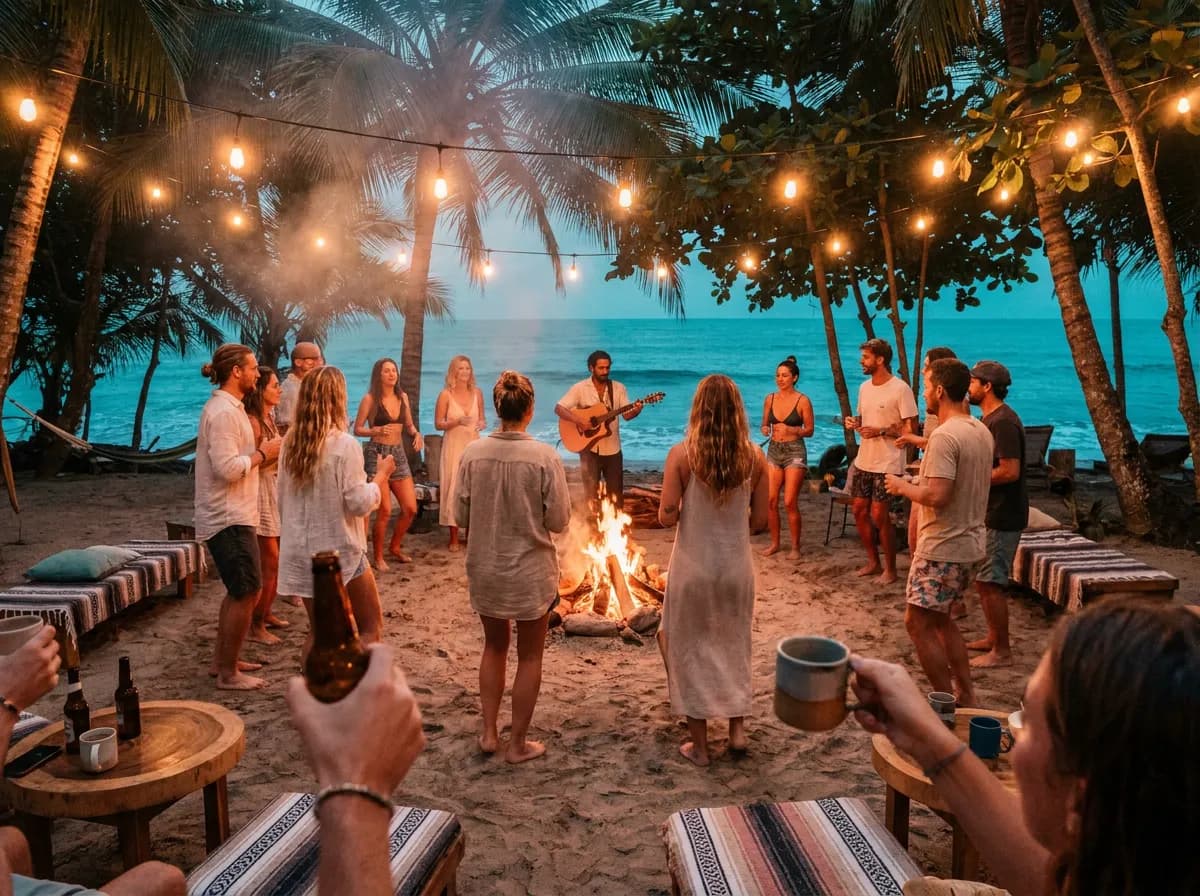
This is the part the market label misses entirely. Thursday night is when you run into the person you met surfing on Tuesday, when someone invites you to a beach bonfire you didn't know was happening, when the wellness crowd and the surf crowd and the food crowd all overlap for two hours before splitting off in different directions.
gobimba.com describes Santa Teresa's social life well: things here don't follow a fixed schedule so much as a rhythm. Thursday is one of the clearest expressions of that rhythm. Come open to conversation and you'll leave with plans.
After the market, the natural next move is La Lora for live music, or Rocamar if you want a proper cocktail in a more settled setting. lesrochesretreat.com puts Rocamar's golden hour crowd arriving around 5:30 PM, so you could actually hit the beach bar first, then walk to the market around 6:15 PM, and move into dinner or La Lora from there. That sequencing works well. For the full picture on where to drink, see best-bars-cocktails-santa-teresa and the broader nightlife-santa-teresa guide.
Seasonal Notes
The market runs year-round but the vibe shifts with the season. During high season (December through April) it's packed, loud, and festive. The food vendors multiply, the craft stalls expand, and the whole thing feels like a proper event. During the green season (May through November) it's quieter, some vendors skip weeks, and you might find a smaller but more local crowd. That version is actually better in some ways: shorter lines, easier conversations, and the food that's there tends to be from the vendors who are serious about it rather than just chasing tourist traffic.
If you're visiting in the rainy season, read the rainy-season-santa-teresa guide so Thursday night rain doesn't catch you off guard.
Getting There and Getting Home
The market happens along the main road in the Carmen area. If you're staying in Mal Pais or further south, budget about 10-15 minutes by bike or scooter. Taxis and Uber both operate in Santa Teresa and a ride between most points in town runs roughly 10-15 USD as of 2026, per lesrochesretreat.com. The road is dark and unlit in stretches, so if you're walking back late, bring a headlamp or use a ride.
FAQ
What time does the Thursday Market start and end? Vendors typically set up from around 5:30 to 6 PM. The food runs out by 8 PM on busy weeks. The market winds down around 9 PM, though the surrounding bars stay active much later.
Is it free to enter? Yes. No entry fee, no wristband. You just show up. Bring cash in colones or USD since not every vendor takes cards.
Is it good for kids? Genuinely yes. It's outdoors, the food is accessible, and the early hours (6 to 8 PM) are family-friendly before it tilts more toward a bar crowd. See santa-teresa-with-kids for more on navigating the town with children.
Does it run during rainy season? Yes, though it's smaller. Bring a light rain jacket. A passing shower usually doesn't shut things down, but a heavy downpour can thin the crowd fast.
Is the craft market worth shopping or just browsing? Mostly browsing, with occasional exceptions. Go for the food, treat any good craft find as a bonus.
Browse the full /directory/nightlife hub to plan the rest of your Thursday night.