Where the natural tide pools are in Santa Teresa, Mal Pais, Playa Carmen and Playa Hermosa, how to reach each, which tide and time of day works, how to check the swell, what to wear, and when to turn back.
The natural tide pools around Santa Teresa form on volcanic rock shelves at low tide, free to visit, in four places: the north end of Playa Carmen, the rocks between Playa Santa Teresa and Playa Hermosa, the south end of Playa Hermosa, and the Mar Azul pools in Mal Pais. Arrive 30 to 60 minutes before the lowest tide, wear reef shoes, and check the swell, because a big set can cross the rock even at low water.
The short version
For families with small children, go to Playa Ventanitas or the south end of Playa Hermosa. For the largest and deepest pool, go to the Mar Azul pools in Mal Pais at the lowest tide of the week. For a quick look without a drive, walk the rocks at the north end of Playa Carmen. Pick a day when the low tide falls between about 9am and 2pm, arrive early to watch the waves for fifteen minutes, and leave when the water starts returning.
There is no entry fee, no lifeguard at the pools, no shade and no changing room at any of them. They are rock shelves on an open Pacific coast. Treat them as a short, careful visit.
How the tide works here
Santa Teresa has two high tides and two low tides every 24 hours and 50 minutes, so the low tide moves about an hour later each day. A low tide at 7am on Monday is a low tide at noon about five days later. Our tide guide for surfers explains this and why the new and full moons bring bigger swings. For tide pools, the lower the low, the more rock and the deeper the pools you can reach.
Read a tide chart for the dates you are here, such as surf-forecast.com, mondo.surf or costarica.com's two week table, and look for lows that fall in daylight. Published tide tables for Santa Teresa disagree on absolute heights because they use different reference levels, so compare lows to the other lows in the same table, not to a number from somewhere else. The best window of the week is the lowest daytime low. A midday low also gives the best visibility in the water, because the sun is overhead, as one Mal Pais beach guide notes.
Do not stop at the tide time. Check the swell on the same day. A long period swell sends sets across a rock shelf even when the tide is low, and the water that gets you is not the tide but the next wave. If the forecast shows a big south swell, pick another day.
Playa Carmen, north end
The tide pool at the north end of Playa Carmen, in front of the Rancho Itauna restaurants, is the one the local guide at Mint Santa Teresa calls its favourite. Ranchos Itauna is on the beach there, so you can stage a walk, a swim and a meal in one stop. The pool is on the rock shelf at the end of the sand, and it is exposed to the surf, so it is for looking and cooling off at low tide, not a place for toddlers. Check the rocks for urchins before you step. There is no entry fee, and parking is by the beach road.
Between Playa Santa Teresa and Playa Hermosa
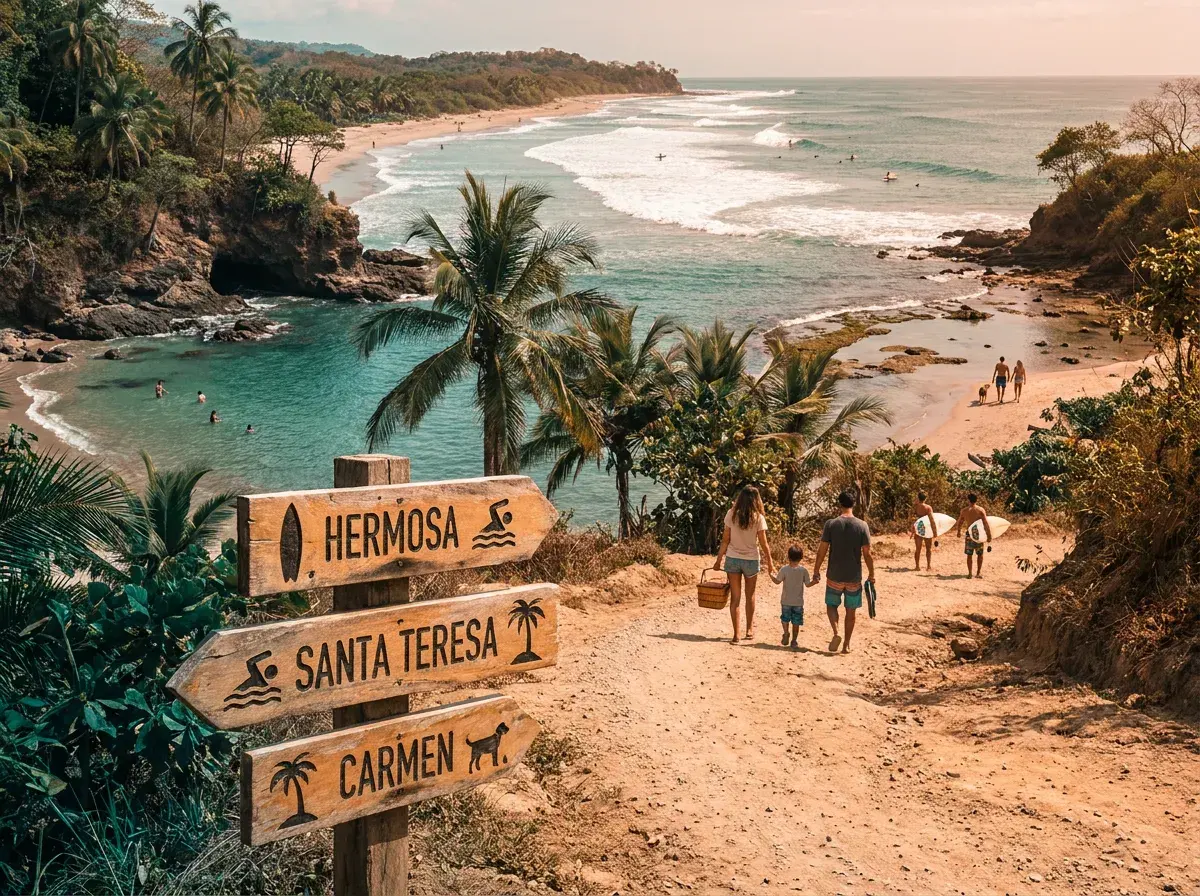
The stretch between Playa Santa Teresa and Playa Hermosa has lots of little rock formations that create tide pools at low tide. One travel write-up describes a big pool deep enough to snorkel or swim in, reached by a parking area on your left where the road comes close to the shore near some rocks (El Peñon). Another local guide notes the parking area in front of Fermata and Rocamar at the north end of Playa Santa Teresa as a landmark but does not name an access point to the rocks. The Hotel Fermata and Rocamar are both on that stretch. Access tracks from the road change with the season and some cross private land, so use the signed beach access, park in a marked pull-out and do not drive onto sand. Costa Rica bans vehicles on the beach.
Playa Hermosa
Playa Hermosa Tide Pools is the one families use. Hermosa is about 7 km north of the Playa Carmen crossroads and has jungle behind the sand and a gentle slope. At low tide the rock shelf toward the south end fills with warm pools deep enough for toddlers and clear enough to watch small fish, and arriving an hour before the low suits it. A Tripadvisor review calls it a great beach for this when the tide is low, with lava fingers that seem to run forever into the sea, and it advises shoes. A second source puts a pool at the northern end. The pools are different at the north and south ends, so look at the rocks from the sand first and pick the side that looks calmest.
Hermosa is also the safest of the main beaches for swimming, but regulars point to a rip channel running out through the sand section, so ask the coconut vendor or a surf instructor where it is. See our best beaches guide for the full beach comparison.
Mal Pais, Mar Azul pools
The Malpais Tide Pools are the largest and most dramatic pools. They sit at the rocky shoreline near Playa Mar Azul, between Santa Teresa and Mal Pais village. Our Mar Azul surf listing covers the point break in front of them.
Directions that several local guides agree on: drive south from the Playa Carmen crossroads toward Mal Pais, turn toward the beach at the Mar Azul sign, and at the end of the road turn left. It can feel like a private driveway, but the road ends at a large grassy area where you can park. From there walk left along the rocks, roughly 200 metres, until the shelf is walkable and the pools open up. The easiest approach on foot is the walk from the south end of Playa Ventanitas. The Bimba guide cautions that older directions may describe tracks or parking that have changed, so use signs and local advice.
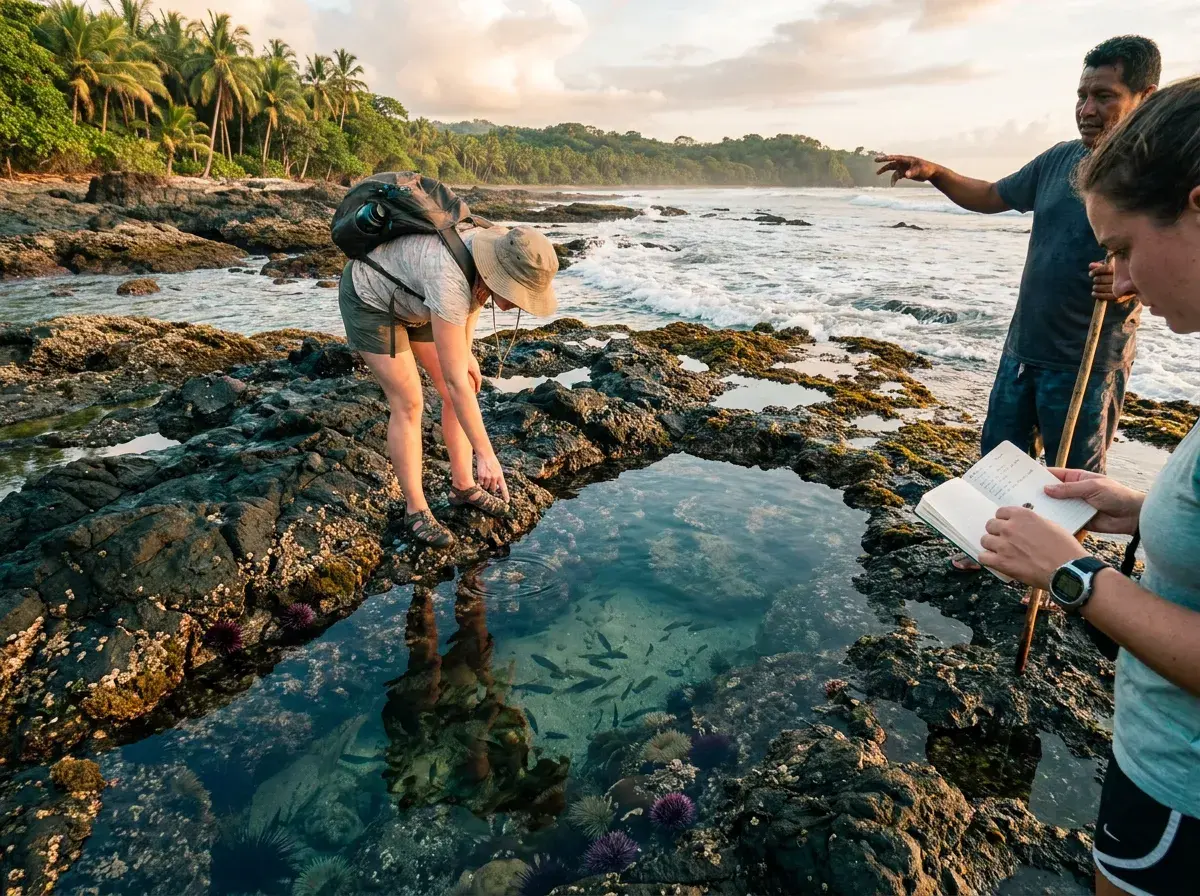
Plan on a 90 minute to two hour window, arriving 30 to 60 minutes before the lowest tide. The pools fill with water, fish, crabs and urchins brought in by the waves at high tide, so watch your hands and feet. Playa Banquitos is a quiet cove just north of the pools on the Mal Pais side. Playa Cuevas, also called Los Suecos, is a separate cove farther south and is not the tide pool.
Playa Ventanitas, the easy one
Playa Ventanitas is about 10 minutes south of the crossroads. It is narrow, with trees close to the water for shade, a marked parking area with bins, a shallow creek across the sand, and a rock shelf that makes calm pools with sandy patches. If you are travelling with toddlers it is the first place to try, and our Santa Teresa with kids guide agrees.
Safety
Tide pools are not a managed swimming facility. Go with these rules.
- Watch the waves for fifteen minutes before stepping onto the rock. If water crosses your route, do not continue.
- Leave before the tide begins to return. The way back can disappear before the pool does.
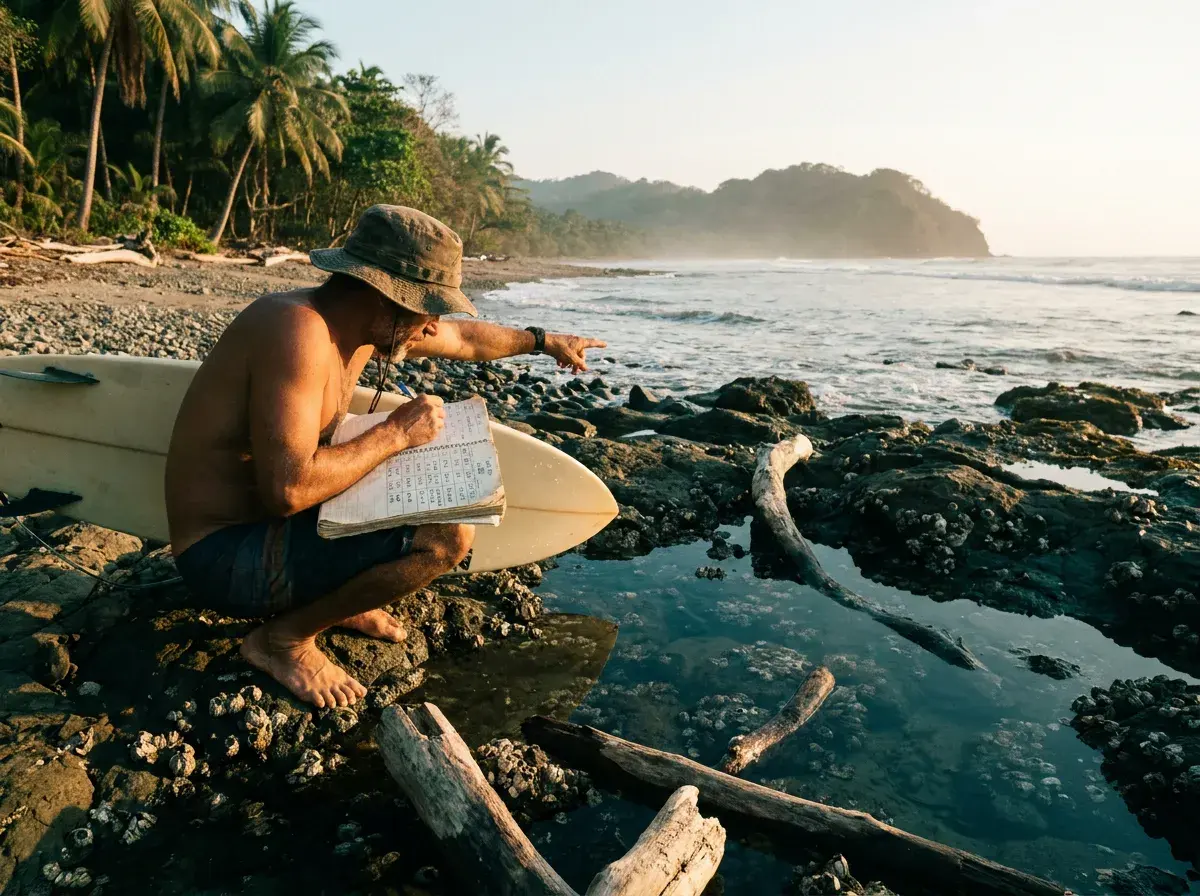
- Wear reef shoes or sturdy water shoes. The rock is sharp and slippery, and sea urchins sit in the cracks.
- Keep children within arm's reach. Pools can be deeper than they look, and wave surges move through them.
- Do not turn your back on the sea while taking photos, and do not step to the rim to get closer.
- No lifeguards are posted at the pools. In an ocean emergency in daylight call the lifeguard rescue line at +506 2640-0911, and call 911 after dark.
- Do not touch, move or collect animals, and do not pour drinks or sunscreen into the pool.
See our safety guide for general beach and rip current advice.
What to bring
Reef shoes, a hat, sunscreen applied before you reach the pool, plenty of water, a towel and a dry bag for your phone. A mask is optional if you are heading to a deeper pool. Bring insect repellent for the walk, especially in green season, and see the heat, dust and insects guide. Take a tide chart screenshot, since signal is unreliable at the rocks.
Best time of day and year
The tide decides the hour, not the clock. A midday low is ideal because the light is good and visibility is best. A low at 6am is fine for a cool, quiet walk but the light is flat. The dry season (December to April) has calmer water and more predictable swell conditions. Green season can bring bigger swell and rain, so check the forecast on the morning. Pair the pools with an early beach morning at Hermosa and a sunset at Carmen, as our sunset spots guide suggests.
Browse every beach and outdoor listing in one place at the /directory/activities hub.
FAQ
Where are the tide pools in Santa Teresa?
At the north end of Playa Carmen near Ranchos Itauna, along the rocks between Playa Santa Teresa and Playa Hermosa, at the south end of Playa Hermosa, and at the Mar Azul pools in Mal Pais. Playa Ventanitas has calmer rock pools suited to small children.
What tide is best for the tide pools?
Low tide, and the lower the better. Arrive 30 to 60 minutes before the lowest tide, plan on a window of 90 minutes to two hours, and choose a day when the low falls in daylight. Check the swell too, because waves can cross the rock at low tide.
Are the tide pools safe for kids?
The Playa Hermosa pools and Ventanitas are the ones families use, with warm shallow water at low tide. Rock is sharp and slippery, there are urchins, and there are no lifeguards, so keep children within reach and use reef shoes.
How do I get to the Mal Pais tide pools?
Drive south from the Playa Carmen crossroads, turn toward the beach at the Mar Azul sign, turn left at the end of the road, park on the grass and walk left along the rocks for about 200 metres. Check current access locally, as tracks change.
Do I have to pay to visit the tide pools?
No. None of them posts an entry fee. Parking at Ventanitas and Cuevas is informal, so carry small change in case an attendant asks for a tip.
Is there a tide table for Santa Teresa?
Yes. Surf-forecast.com, mondo.surf and costarica.com all publish Santa Teresa tide tables, and our tide guide explains how to read them.