Every waterfall within 90 minutes of Santa Teresa with drive times, parking and entry fees, the three tiers of Montezuma, the Sun Trails canopy access, El Chorro falling into the sea, and honest advice on jumping and green season water.
The best waterfall near Santa Teresa is Montezuma Falls, 40 to 50 minutes away by car, with a free lower pool you can swim in and two upper tiers reached through the Sun Trails property for about $5. El Chorro, which drops straight into the sea north of Montezuma, is the second trip to make.
The short version
There is no waterfall in Santa Teresa itself. The peninsula's rain drains toward the Montezuma side, so that is where the water is, and all the falls below are on that side or in Cabuya. Montezuma Falls is the one everybody does and it earns the drive: an 80 foot lower cascade with a deep pool, then a middle and upper tier with smaller pools and a rope swing. El Chorro is a rarity, one of a few dozen waterfalls in the world that fall directly into the ocean, and you can drive to within ten minutes of it. Jaguar cascada near Cedros and the Rio Lajas pools at Cabuya are for people who have already done the first two and want somewhere with nobody in it.
Right now, in late September, the rivers are full and the falls are at their best, and the same water makes the rock crossings at El Chorro and the riverbed trail at Montezuma slippery and occasionally dangerous. Go in the morning, before the afternoon rain, and turn back if a crossing looks faster than you would wade through at home.
Montezuma Falls
Montezuma Waterfall is a set of three cascades on the Rio Montezuma just south of the village. The lower fall, closest to town, is the big one at about 80 feet, with a large pool at the base that is the best swimming hole on the peninsula. The middle fall is around 40 feet and drops into a smaller pool; the upper fall is smaller again and has the rope swing. To see the middle fall you swim across the pool of the upper one and look down.
There are two ways in. The riverbed trail starts at the Montezuma Waterfalls Trailhead and Parking Lot, just past the bridge about 500 m south of the village. Entry is free and parking is $5 (some visitors report ₡2,000), paid in cash to the attendant, and the lot asks that nobody go in after 4:30pm so everyone is out before dark. The walk is 20 to 30 minutes of rock hopping along the river, wet and slippery in green season, and it brings you to the lower fall only. Reaching the upper tiers from here means climbing a steep, rooty path that has hurt people, so most visitors treat the lower pool as the destination.
The second way is from above, through the Sun Trails property. Drive south from the village, cross the bridge, turn right after Hotel Amor de Mar and go up the paved hill past the butterfly garden to Sun Trails, or park near the old Butterfly Brewing site and walk the trail to the checkpoint. Sun Trails charges about $5 per person for the self-guided trail, which includes a hanging bridge and stairs down to the upper and middle falls, open 8:30am to 5:30pm. From the upper falls you can descend a long staircase to the lower pool and climb back up afterwards. This route has more shade and fewer people.
On jumping: people jump from the middle fall and from the rocks at the upper pool, and tourists have died at Montezuma Falls, from slipping at the edge and from jumping short onto rock. The lower fall is never a jump. Local kids know the exact spot and the exact depth on the day; you do not. The nearest hospital is hours away and carrying an injured person out of the riverbed is a rescue operation. Swim, sit under the spray, and leave the jumping to the people who grew up here.
One more thing regulars warn about: a man sometimes waits at the lower parking lot offering to "guide" people to the falls and asks for $30 a head afterwards. You do not need a guide for the riverbed trail. Say no politely and follow the river.
Sun Trails canopy and waterfall combo
Sun Trails Tours runs the zipline above the falls, and the tour is the way to combine both in one morning. The canopy has 9 cables and 13 platforms over the river valley with a stop for swimming at the upper pools, with pickup from hotels in Santa Teresa, Mal Pais, Montezuma and Cabuya. Tour start times are usually 9am, 1pm and 3pm; the trip takes three to four hours door to door. Prices depend on where you book: Sun Trails' own rate has been around $62 plus tax, resellers list $70 to $108 with transport. Weight limit is 250 lb after the 2025 cable upgrade, per recent reviews. We compare it with the Mal Pais zipline in the zipline and canopy guide.
Zuma Tours at Plaza Kahuna and Tiko Tours both sell Montezuma waterfall days from Santa Teresa, Tiko from $85 including the village, if you do not want to drive. The ATV tour operators run the same trip on quads.
El Chorro (Cocalito Falls)
El Chorro drops off a cliff onto lava rock and into the Pacific at the end of Playa Cocalito, about 8 km north of Montezuma inside the Romelia refuge. It is one of roughly 30 known tidefalls in the world, and the rainbow in the spray on a sunny morning is the photograph everybody comes for.
The classic way is the beach walk from Montezuma: about 6 km each way along sand and jungle path, two hours in each direction, only possible at low tide because sections of the route are impassable when the water is up. Start at first light with two litres of water each, because there is no shade for long stretches and nothing to buy. Tour companies in Montezuma also run it on horseback.
The quick way is to drive. From Montezuma go inland to Cobano, take Route 160 toward Tambor for about 9 km, turn at the Escuela la Abuela toward the Tango Mar hotel, keep right past the hotel, and follow the flat dirt road (no 4x4 needed) to a small lot that holds about ten cars, with no attendant. From there a ten-minute forest trail reaches the top of the falls. To see it properly you cross the stream a few feet from the lip, on algae-covered rock, then scramble down a steep path of roots and rock to the flat rocks at the bottom. In the dry season the stream is a trickle. In September it is not, and if the crossing looks fast, do not do it. There are no rails and no one to help. Cocalito beach beyond the falls is beautiful and has big waves and rips, so paddle rather than swim. Budget 90 minutes from Santa Teresa each way by car, and an hour at the falls.
Jaguar cascada
Jaguar cascada waterfall is a small double waterfall off the Cabuya road near Cedros, between Montezuma and Cabuya. It rates 3.7 on Google from a handful of reviews, which tells you what to expect: a short walk to a modest fall with a swimming hole, pretty in September and a dribble by March, with the access track sometimes blocked by a fence or a "private" sign. Ask at your lodging in Montezuma for the current way in before you drive there, and treat it as a stop on the way to Cabuya. It is 50 to 60 minutes from Santa Teresa.
Rio Lajas pools and the Cabuya strangler fig
At the bridge over the Rio Lajas just before Cabuya village there is a giant strangler fig, said to be the largest in Costa Rica, and from the beach north of Cabuya you can wade upstream in the river to natural pools in the rocky bed, with herons and kingfishers along the banks. Locals call them the natural jacuzzis. It is a wade rather than a hike, free, and best in the green season when there is water in them. Combine it with the Cabuya island cemetery walk at low tide and a chocolate stop at Indigena.
Cabo Blanco reserve
The Reserva Natural Cabo Blanco does not have a waterfall you can swim in, but the Sendero Sueco trail crosses streams on its way to the beach at the tip of the peninsula, and after heavy rain the creek crossings run high enough to feel like one. Entry is $12 for foreigners, the park is closed Monday and Tuesday, and the round trip is about 8 km with real elevation. Our Cabo Blanco hiking guide has the trail detail. Plan it as its own day, and pair the drive with Montezuma Falls the day after.
Comparison table
| Waterfall | Drive from Santa Teresa | Cost | Walk | Swim | Best months |
|---|---|---|---|---|---|
| Montezuma Falls, lower | 40 to 50 min | Free, $5 parking | 20 to 30 min on river rock | Yes, big pool | June to December |
| Montezuma Falls, upper tiers | 45 to 55 min | About $5 via Sun Trails | Stairs and bridges, steep | Yes, small pools, rope swing | June to December |
| Sun Trails canopy combo | Pickup included | $62 to $108 | Zipline plus stairs | Yes | Year round |
| El Chorro by car | 80 to 90 min | Free | 10 min plus a stream crossing and scramble | Paddle only | December to April for the crossing, September for the volume |
| El Chorro on foot from Montezuma | 40 min then 2 hr walk | Free | 6 km each way at low tide | Paddle only | Dry season |
| Jaguar cascada | 50 to 60 min | Free, ask locally | Short | Small pool | July to November |
| Rio Lajas pools | 45 min | Free | A wade upstream | Yes | July to November |
| Cabo Blanco | 25 min to Cabuya entrance | $12 | 8 km round trip | Beach only | December to April |
Practical notes
Wear shoes you can get wet and that grip: water shoes with a real sole, trail runners you do not mind soaking, or sandals with a heel strap. Flip-flops are how people end up in the Cobano clinic. Bring a dry bag for your phone, a litre of water per person per hour of walking, and sunscreen for the riverbed section, which has no shade.
Fees are cash. Montezuma parking takes dollars or colones; Sun Trails prefers colones or dollars in small bills for the trail fee and takes cards for the canopy tour. Nobody at El Chorro takes anything, because nobody is there.
Green season water is the trade-off. The falls are full and loud from June through November and the pools are deep enough to swim, and the same rain makes every rock crossing slower and every trail muddier. By March the upper Montezuma tiers can be too shallow to jump into even where jumping is allowed, and El Chorro thins to a ribbon. The rainy season guide has the monthly picture.
Leave by 2pm wherever you are. Afternoon storms arrive fast on this side of the peninsula, the river rises with them, and sunset is around 5:30pm all year. Flash floods on the Montezuma river are rare but real; if you hear a roar upstream, get out of the riverbed.
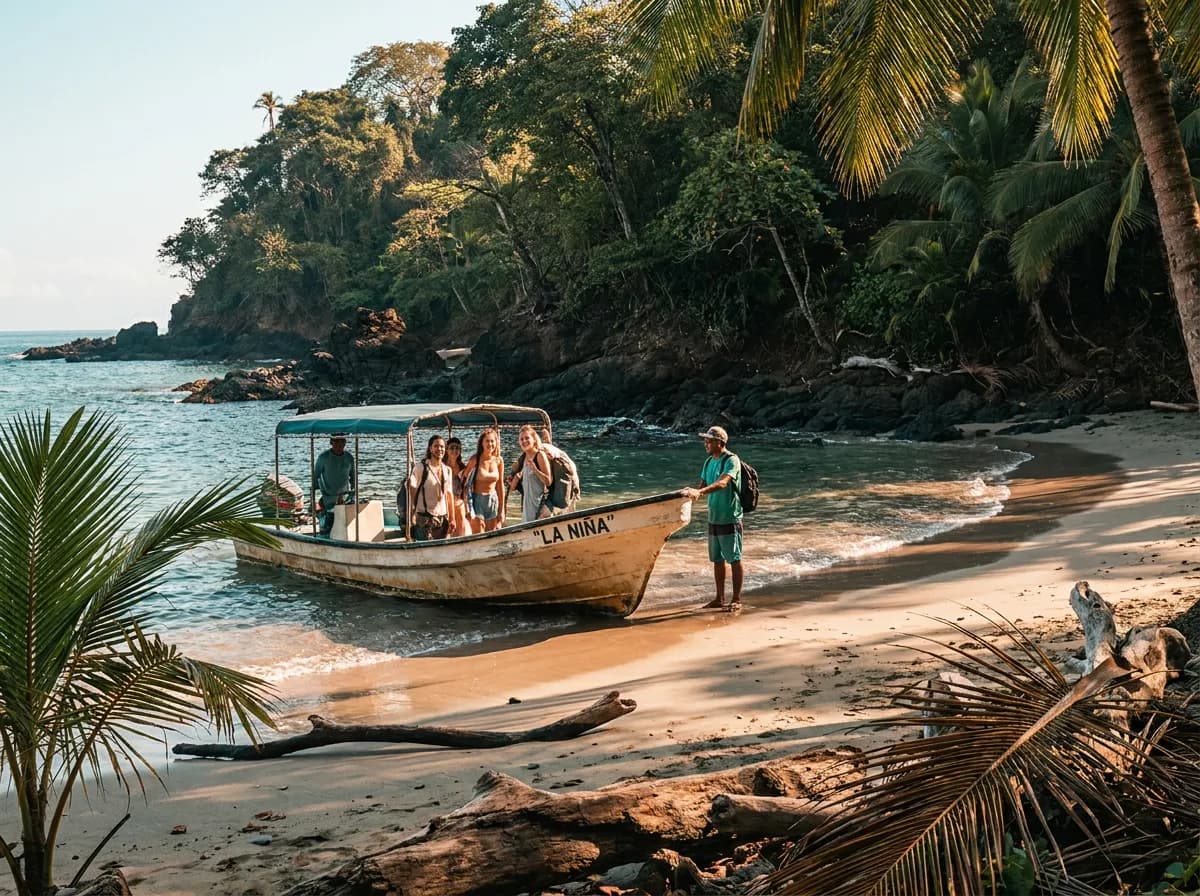
If you are stringing several of these together, the day trips guide has the logistics, and a waterfall morning pairs well with the Isla Tortuga boat from Montezuma the next day.
FAQ
How much does Montezuma waterfall cost in 2026?
The lower waterfall is free to enter and parking at the trailhead lot is $5 (some visitors pay ₡2,000). The upper two tiers are reached through Sun Trails' land for about $5 per person on the self-guided trail, or as part of their zipline tour from about $62 plus tax.
Can you jump at Montezuma waterfall?
You can, and people do from the middle and upper tiers, but tourists have died there from slipping and from hitting rock. The lower fall is never safe to jump. Our advice is to swim in the pools and skip the jumps unless a local is showing you the exact spot on the day.
How far is Montezuma waterfall from Santa Teresa?
About 40 to 50 minutes by car on the road through Cobano, a little longer by ATV. Tour companies in Santa Teresa run it as a half day with pickup from about $85 per person, and the Sun Trails zipline includes the upper falls with hotel pickup.
What is El Chorro waterfall and how do you get there?
El Chorro is a waterfall that drops off a cliff straight into the sea at Playa Cocalito, north of Montezuma. Drive toward Tango Mar off Route 160 and walk ten minutes, or hike 6 km along the beach from Montezuma at low tide. The final approach crosses the stream at the top of the falls, so skip it after heavy rain.
Are the waterfalls worth visiting in the rainy season?
Yes, this is when they are biggest. June through November the pools are deep and the falls are loud. Go in the morning, expect slippery rock, and turn back at any crossing that looks fast. Dry season gives easier access and much less water.
Is there a waterfall in Santa Teresa itself?
No. The nearest swimmable waterfall is Montezuma Falls, 40 to 50 minutes away. Santa Teresa's side of the peninsula is drier, which is why the surf town has beaches and tide pools and Montezuma has the rivers.
Browse every tour, reserve and outdoor spot in one place at the /directory/activities hub.