Renting a car for Santa Teresa: why 4x4 matters, the mandatory-insurance trap that doubles your quote, river crossings, parking, and where to rent.
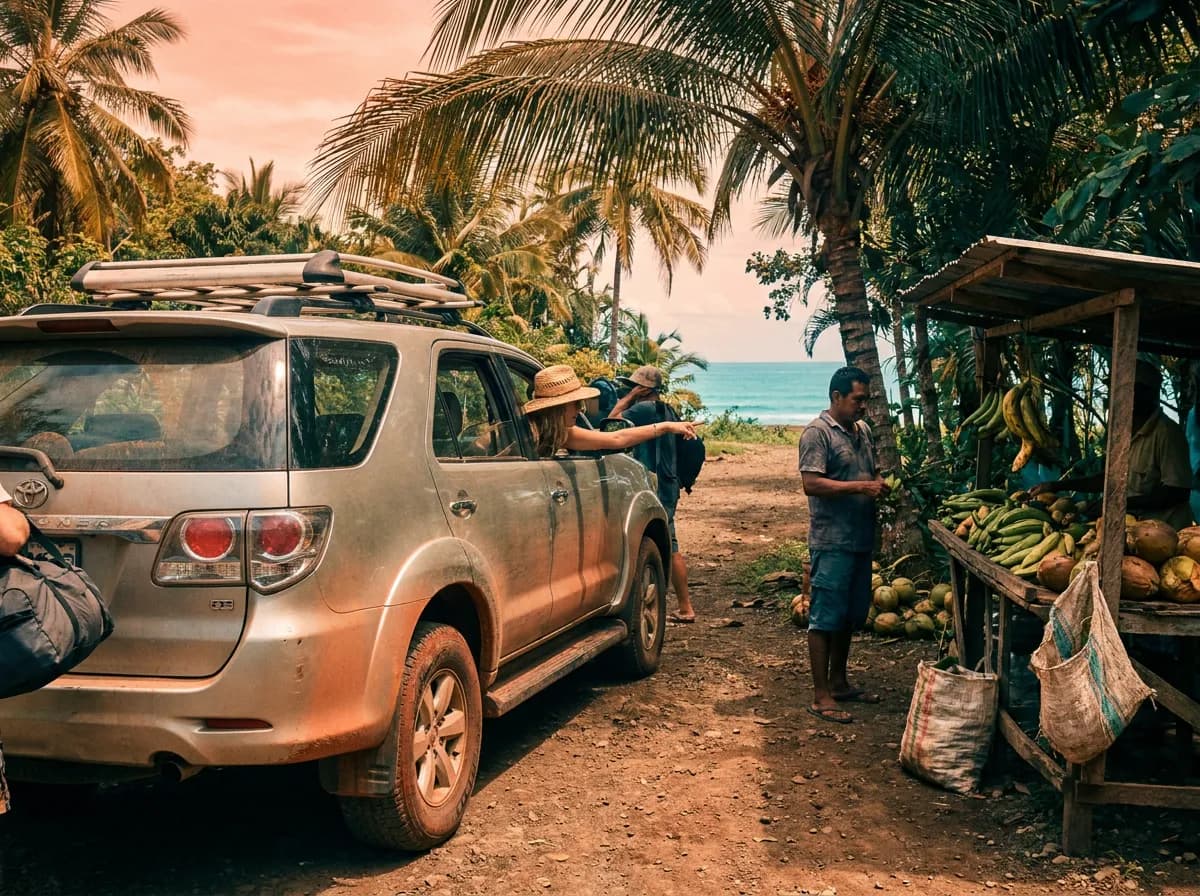
Renting a car for the Nicoya Peninsula is one of those decisions that looks simple until you're standing at the airport counter watching your "budget" quote double in real time. Here's what you actually need to know before you sign anything, from the mandatory insurance trap to the river crossings nobody warns you about.
The 4x4 Question: Not Optional for Santa Teresa
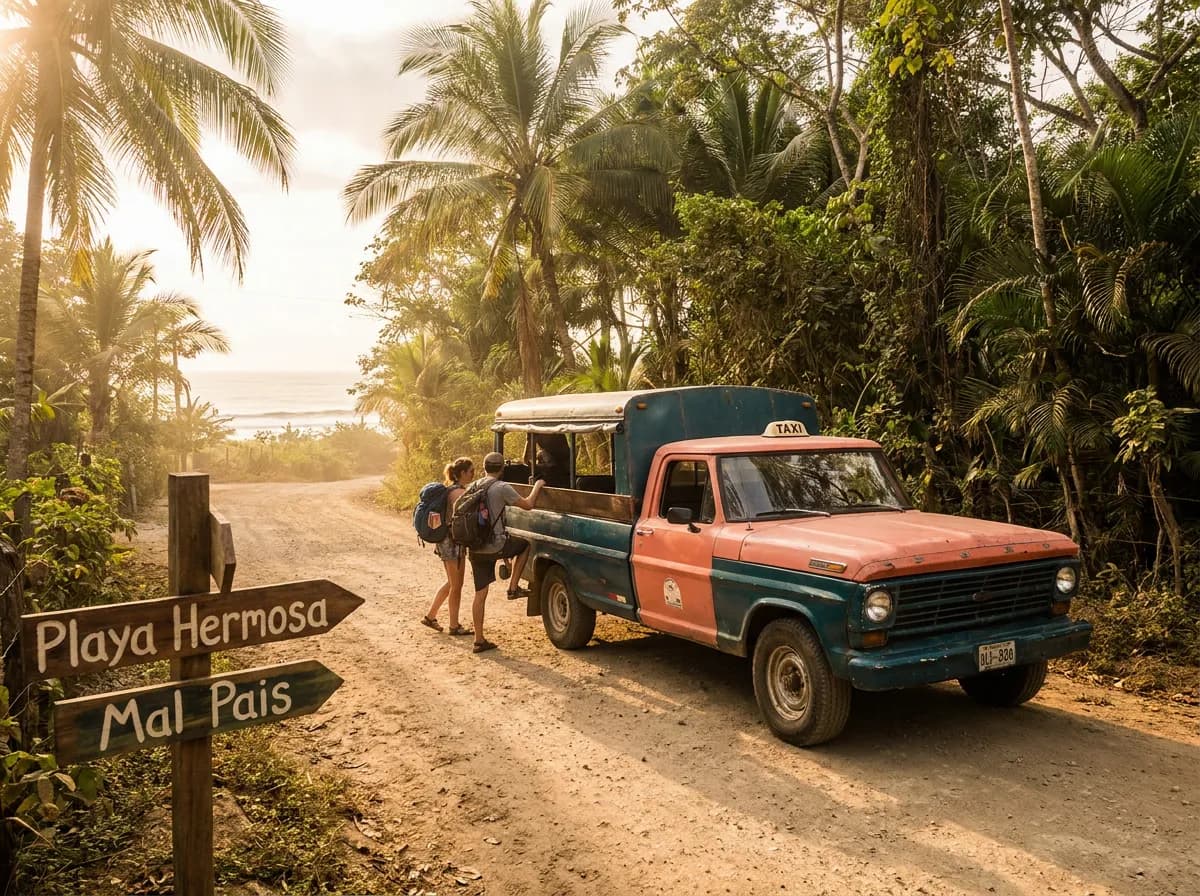
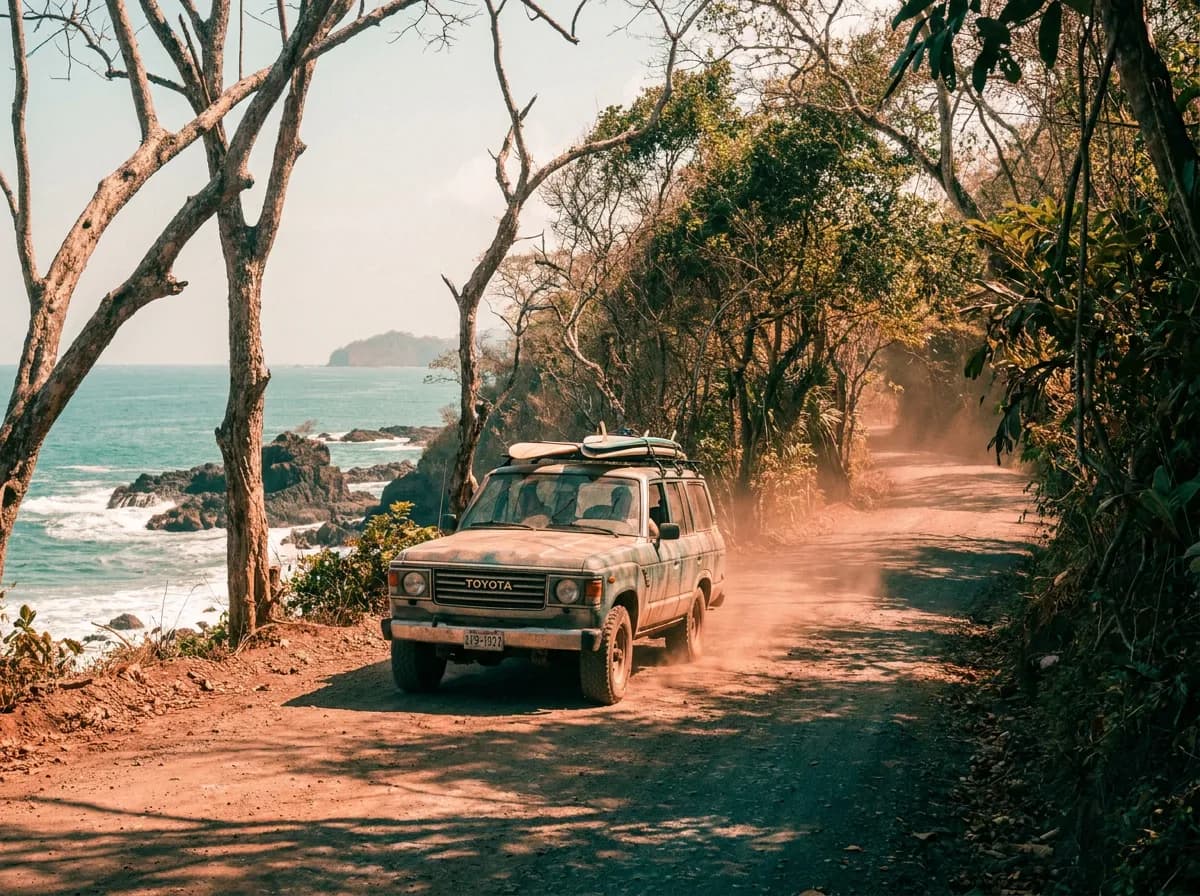
Let's settle this immediately. If you are coming to Santa Teresa, Mal Pais, or Montezuma, rent a 4x4. Not because you're going on safari. Because the main road through Santa Teresa is unpaved, potholed, and during green season (May through November) it occasionally becomes a legitimate obstacle course with water crossings and ruts deep enough to swallow a sedan's undercarriage.
The paved road ends around Playa Carmen. Once you turn north toward Santa Teresa proper, you're on dirt and gravel. In dry season (December through April) a standard car can technically make it, but you'll be white-knuckling every pothole and praying nothing washes out. In green season, sightsandsounds.co puts it plainly: the main road through Santa Teresa becomes rough enough after rain that 4x4 is the only sensible choice.
There's also a legal reason to go 4x4. Most rental contracts void your insurance coverage if you take a non-4x4 vehicle on unpaved roads. That's not a scare tactic, it's in the fine print, and the road to Santa Teresa qualifies. If you get stuck or damaged on an unpaved section in a sedan, you're paying out of pocket. toorizta.com confirms this is standard across Costa Rican rental companies.
Budget for a 4x4: roughly $60-120 per day before insurance, with peak season (December through April) pushing toward the top of that range, per sightsandsounds.co. Confirm current rates directly with the company, as prices shift seasonally.
The Mandatory Insurance Trap
This is where people get burned. You find a rental quote online for $45 a day, feel good about it, and then arrive at the counter to discover your actual daily cost is $80-100. Here's why.
TPL (Third-Party Liability) insurance is legally mandatory in Costa Rica. Every driver must have it. It is not optional, it cannot be waived, and your credit card does not cover it. gsnsp.com is direct about this: premium credit cards may cover collision damage, but they will never cover mandatory TPL. Expect to pay $12-25 per day just for this baseline coverage, according to toorizta.com.
On top of TPL, you'll be offered:
- CDW (Collision Damage Waiver): Covers damage to the vehicle you're driving. Usually $15-30 per day. Comes with a deductible of $750-1,500 unless you pay for "zero deductible" coverage. Not legally required but practically important.
- SLI (Supplemental Liability Insurance): Optional top-up that boosts your third-party liability ceiling beyond TPL's $20,000 cap. Worth considering if you're driving a large 4x4 through a busy area.
A realistic one-week budget for a 4x4 with full coverage runs $700-1,200 or more in peak season, per toorizta.com. The lesson: always get a quote that explicitly includes TPL. If the rate looks suspiciously low, it almost certainly excludes mandatory insurance.
Two local companies with a reputation for transparent pricing are Adobe and Vamos. Both include mandatory insurance in their quotes rather than hiding it until you're at the counter, per sightsandsounds.co. Book directly with reputable companies rather than through aggregator sites that bury the real costs.
River Crossings: The One Rule You Cannot Break
During green season, some roads on the Nicoya Peninsula involve water crossings. GPS apps will sometimes route you directly through a riverbed to save ten minutes. Do not do it.
gsnsp.com is unambiguous: driving through rivers voids both your TPL and CDW. If your car stalls in the water, you are fully liable for the vehicle. Find a bridge. If there's no bridge and the crossing looks even slightly deep, turn around and wait. No beach is worth a totaled rental and a five-figure bill.
This is also why a 4x4 with high clearance matters. Even if you do cross a shallow, clearly safe ford, a sedan's air intake is in a very different place than a proper 4x4's.
Getting Here: The Ferry and the Drive
If you're flying into San Jose (SJO), the drive to Santa Teresa takes about 5-6 hours total, including the Puntarenas to Paquera ferry crossing. Our full getting to Santa Teresa guide covers the route in detail, but the short version:
- San Jose to Puntarenas ferry terminal: roughly 2 hours, longer in morning traffic
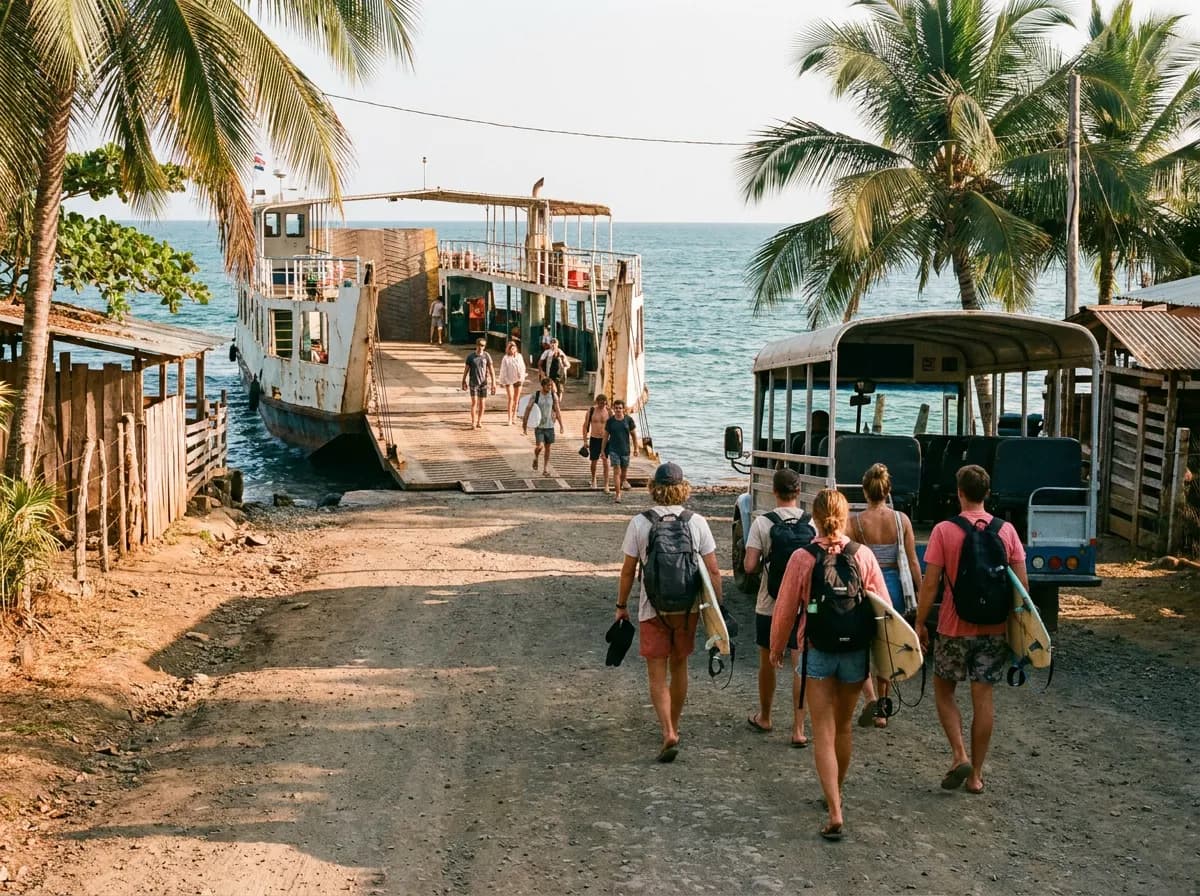
- Ferry crossing (Naviera Tambor, Puntarenas to Paquera): about 70-75 minutes
- Paquera to Santa Teresa: about 1.5 hours
Ferries run several times daily, with the first departure from Puntarenas around 5:30 AM and the last around 8:30 PM, per sightsandsounds.co. Arrive at least an hour early if you have a car. During holidays and peak season, arrive earlier. Missing the last ferry means sleeping in Puntarenas. Check paquera-vs-tambor-ferry for current schedule details and tips on which crossing to book.
Flying into Liberia (LIR) instead cuts the journey to 3.5-4 hours and skips the ferry entirely. If your flight options allow it, LIR is often the easier entry point for the Nicoya Peninsula.
Parking in Santa Teresa
Parking is informal and generally not a cost issue. Most hotels and restaurants have their own lots or a patch of dirt out front. There are no parking meters, no garages, and no ticketing infrastructure to worry about. The main road is narrow, so don't leave your car half-blocking it while you grab a coffee.
During peak season, the road through town gets genuinely congested. If you're staying somewhere with secure parking, use it. Break-ins targeting rental cars do happen. Don't leave bags, cameras, or anything visible in the car, ever. For more on staying safe here, see our safety guide.
Do You Actually Need a Car the Whole Time?
Once you're in Santa Teresa, a car is useful but not essential for day-to-day life. The main strip is walkable, ATVs and motos are easy to rent locally, and taxis operate throughout the area. If you're staying for more than a week, you might find you use the car mainly for day trips. Our getting around without a car guide covers your local options honestly, including what's genuinely walkable and what requires wheels.
For day trips to Montezuma, Cabo Blanco, or Cabuya, having your own car is a real advantage. See day trips from Santa Teresa for routes worth the drive.
FAQ
Can I use my credit card to cover rental car insurance in Costa Rica? Partially. Some premium cards cover CDW (collision damage), but none cover mandatory TPL, which is required by Costa Rican law. You must purchase TPL locally regardless of your card benefits. Get written confirmation from your card issuer before you travel if you plan to rely on it for CDW.
What happens if I take a sedan on the road to Santa Teresa? In dry season you'll probably make it, but it's rough and your rental contract may void your insurance on unpaved sections. In green season, you risk getting stuck and being fully liable for any damage. Rent the 4x4.
Is it cheaper to rent a car at SJO airport or in town? Airport rentals carry a 12-15% surcharge, per toorizta.com. There are no major rental offices in Santa Teresa itself, so most people pick up at the airport. Factor the surcharge into your comparison shopping.
When should I arrive at the Puntarenas ferry terminal? At least one hour before departure, more during holidays and peak season. If you miss your ferry with a car, the next crossing could be hours away. Build in buffer time.
Are there ATMs near the car rental offices or along the route? There are ATMs in Cobano, which is your last reliable stop before the beach. Stock up on colones there. For a full breakdown of cash access in the area, see our ATMs and money guide.
Browse all local transport and logistics options in our services directory.